AI Search · Answer Engines
Perplexity SEO: The Complete Guide to AI Answer Platform Visibility
Perplexity doesn’t rank pages — it answers questions and cites sources. Winning visibility there means becoming the source its answers quote. This guide covers how Perplexity works, what gets cited, and the exact playbook to earn those citations.
- Citation mechanics
- Answer-ready content
- Entity clarity
- Source authority
- Measurement methods

The platform
What Perplexity SEO is — and isn’t
Perplexity is an answer engine: users ask questions, it searches the live web, and responds with a synthesized answer carrying inline citations. “Perplexity SEO” means optimizing to be cited in those answers.
It isn’t traditional ranking. There’s no position #1 to win — there are cited sources woven into an answer. A page can be cited without ever ranking on Google, and a Google #1 can be ignored if it isn’t quotable.
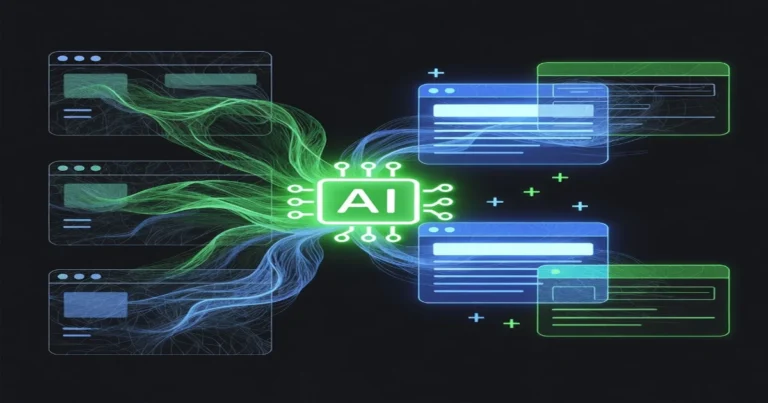
It is retrieval plus synthesis. Perplexity retrieves candidate sources (influenced by familiar signals: relevance, authority, freshness), then an LLM composes the answer from them. You must win twice: be retrieved, then be worth quoting.
Citations are the currency. Every cited source gets visibility and referral traffic. Uncited content is invisible regardless of quality. The entire discipline reduces to one question: what makes a source citable?
- Optimize for citation, not position
- Win retrieval first, then the quote
- Freshness matters more than in classic SEO
- Direct answers beat buried insights
- Authority signals still gatekeep retrieval
- One page can be cited across many queries
Mechanics
How Perplexity finds and cites sources
Perplexity doesn’t publish its algorithm, but observable behavior reveals consistent patterns in what gets retrieved and quoted.
Query understanding
Perplexity parses the question’s intent and often runs multiple searches behind one query — including follow-ups. Pages that answer the question and its natural follow-ups get cited more broadly.
Source retrieval
Candidate sources skew toward topically relevant, authoritative, fresh pages — familiar SEO fundamentals. Strong classic SEO is table stakes: if you’re not retrievable, you can’t be cited.
Answer synthesis
The model composes from retrieved sources, preferring clear factual statements, specific numbers, and distinctive positions. Vague, hedged, or generic prose gets passed over for sources that say something concrete.
Citation patterns
Observe which source types get cited in your niche: in our experience, original research, official documentation, expert-authored explainers and recent data dominate. Mirror what’s cited, not what merely ranks.
Treat all of this as observed behavior, not documented rules. Perplexity iterates constantly — build for the underlying principle (be the clearest citable source) rather than any single tactic.
Playbook
Make your content citable
Five content moves that directly increase citation likelihood, drawn from observing thousands of AI-generated answers.
Answer first, then explain
Open each section with a direct 40–60 word answer a model can lift verbatim, then expand. This “answer-first” structure is the single highest-leverage formatting change for citation.
Publish original data
Surveys, tests, benchmarks, case numbers — anything that exists only on your page. Models cite unique data because they can’t synthesize it from elsewhere. Original research is citation moat-building.
Be specific and quotable
“Typically 6–12 weeks” gets cited; “it depends on many factors” doesn’t. Concrete ranges, named examples and clear positions are quotable — hedged generalities are invisible.
Clarify entities
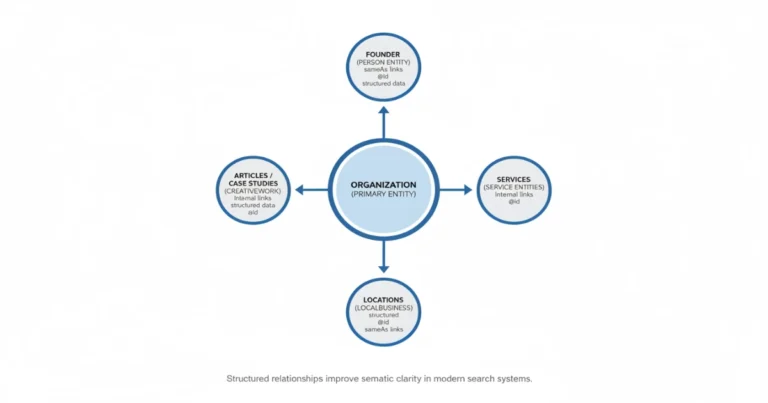
Use consistent names for people, brands, products and places; define terms explicitly; link entities to authoritative references. Clean entity signals help retrieval systems match your page to the right questions.
Structure for machines
Descriptive H2/H3s phrased as questions, short paragraphs, lists, tables and FAQ schema. Machine-readable structure doesn’t just help Google — it helps every retrieval system parse and quote you accurately.
Foundations
Technical groundwork for answer engines
None of the content work matters if retrieval systems can’t access or trust your pages.
Stay crawlable. Don’t block AI crawlers or retrieval bots unless you have a deliberate reason — invisibility to them is invisibility in answers. Review robots.txt and bot rules with answer-engine visibility in mind.
Stay fast and clean. Core Web Vitals, valid HTML, proper schema markup. Retrieval systems favor pages they can parse reliably; broken markup and slow loads get you skipped.
Signal freshness. Show updated dates, refresh statistics, and revisit high-value pages regularly. Answer engines visibly prefer recent sources for time-sensitive topics.
- Audit robots.txt for answer-engine bots
- Fix crawl errors and slow templates
- Add/validate FAQ and Article schema
- Display visible updated dates
- Keep authorship and about pages credible
- Monitor referral traffic from AI platforms
Proof
Measure Perplexity visibility
No rank tracker covers answer engines well yet — so measure with a combination of manual checks and traffic signals.
Prompt testing
Run your target questions through Perplexity regularly and record which sources get cited. Track your citation share over time — it’s the closest thing to a “ranking” in answer search.
Referral traffic
Watch analytics for perplexity.ai referrals. Rising referral volume from AI platforms confirms your citations are converting into visits — the commercial payoff of the whole effort.
Share of answers
For your priority question set, measure what percentage of answers cite you at all. Improving from 10% to 40% citation share is a concrete, reportable win — even without traditional rankings moving.
Outlook
The future of answer-engine optimization
Three directions worth preparing for now, while the field is still young.
Proactive engines
Answer platforms are moving from reactive Q&A toward proactive briefings and agents. Sources structured as clean, factual, entity-rich content will feed those experiences best.
Multimodal answers
Answers increasingly include images, charts and video. Original visuals with descriptive alt text and surrounding context are the next citation frontier.
Trust stratification
Expect citation systems to weight verified expertise and first-party data more heavily over time. Building genuine authority now compounds as filters tighten.
Work with us
Get cited by the engines answering your customers
AEO and GEO programs that make your brand the quoted source across Perplexity, ChatGPT and AI Overviews.
Foundation
AED 1,500/month
- Answer-engine visibility audit
- On-page + technical SEO
- Monthly reporting
Growth — most popular
AED 3,500/month
- Everything in Foundation
- Answer-first content optimization
- FAQ & schema expansion
- Citation tracking & reporting
Authority
AED 6,500/month
- Everything in Growth
- Original research for citation moats
- Multi-engine visibility program
- Quarterly strategy with the founder
Key takeaways
- Perplexity SEO = optimizing to be cited in AI-generated answers, not to win a ranked position.
- You must win twice: be retrieved (classic SEO fundamentals) then be worth quoting (clear, specific, original).
- Answer-first structure, original data, quotable specifics and clean entities drive citations.
- Keep pages crawlable by answer-engine bots, fast, schema-marked and visibly fresh.
- Measure citation share via prompt testing plus perplexity.ai referral traffic — not traditional rank trackers.
- Build for the principle (clearest citable source), not tactics — the platforms iterate constantly.
FAQ
Perplexity SEO questions, answered
Straight answers, no jargon. Anything else — ask us on the free visibility review.
Optimizing your content to be retrieved and cited by Perplexity’s answer engine. Instead of competing for a ranked position, you compete to become one of the quoted sources inside AI-generated answers.
It retrieves candidate sources from the live web — influenced by relevance, authority and freshness — then synthesizes an answer, preferring clear factual statements, specific data and distinctive positions. Original research and expert-authored explainers get cited most in our observation.
Yes — it’s table stakes. Retrieval draws on familiar signals like topical relevance, authority and crawlability. Strong classic SEO gets you into the candidate set; citable content structure wins the actual quote.
Direct 40–60 word answers up front, specific numbers and ranges, original data or examples, clear positions, and machine-readable structure (question headings, lists, tables, FAQ schema). Vague hedged prose gets passed over.
No — and beware anyone who promises them. You can systematically raise your odds: be retrievable, be quotable, publish original data, stay fresh. Citation share improves with consistent execution, but no tactic guarantees any single answer.
Run your target questions through Perplexity regularly and log citation share, watch perplexity.ai referral traffic in analytics, and measure what percentage of your priority question set cites you at all.
Only with a deliberate strategy. Blocking answer-engine bots means invisibility in AI answers — for most businesses chasing visibility, that’s the opposite of the goal. Review the trade-off consciously rather than blocking by default.
Become the source AI answers quote
Get a free 15-minute visibility review — we’ll test your current citation share, audit your answer-readiness, and map the fastest path to AI answer visibility.
Claim My Free Visibility Review No pitch decks. No obligation. Just a clear picture of where you stand.Last updated: 2026 · Reviewed by Liaquat Ali, SEO Specialist
Enjoying our SEO & AI search insights?
Make AliSEOservices.com a Preferred Source on Google to see our SEO, AEO, local search and AI visibility insights more prominently in your Google experience.