
Google Discover SEO · Dubai · UAE · GCC
Google Discover SEO in Dubai: Earn a Place in the Feed People Open Every Day
Google Discover shows your content to people who never searched for it — matched to their interests, led by a large image and an honest headline. There is no submission and no trick. Google Discover SEO is the discipline of being eligible and worth choosing: indexed, policy-clean content in topics you actually know, with the images and headlines the feed needs.
- No submission — eligibility is automatic
- Large images, 1200px+
- Honest, non-clickbait headlines
- Topic expertise that compounds
Quick answer
What is Google Discover SEO? It is preparing your content so Google can show it in Discover, the interest-based feed in the Google app and on mobile. Content is automatically eligible once it is indexed and meets Discover’s content policies — no special tags or structured data are required, and eligibility alone does not guarantee an appearance. What improves your chances is what Google itself recommends: helpful, people-first content, timely topics told well or with unique insight, headlines that capture the essence of the page without clickbait, and compelling, relevant large images.
You do not apply for the feed. You become the kind of publisher the feed can trust.
No submission
Eligibility is automatic once a page is indexed and meets Discover content policies
1200px wide
Google’s recommended minimum for large feed images, in a 16:9 ratio
Interest, not query
Discover matches content to a person’s interests — there is no keyword to rank for
Expertise counts
Discover uses many of the same helpful-content systems as Google Search
The definition
What is Google Discover SEO?
A distribution surface most Dubai businesses ignore because it does not behave like search. That is exactly why prepared brands stand out in it.
Google Discover SEO means shaping your content so it can be selected for Google Discover: pages that are indexed and policy-clean, written as helpful, people-first content in clearly owned topics, presented with honest headlines and large, relevant images (at least 1,200 pixels wide, over 300,000 total pixels, 16:9) with large image previews allowed. No Discover tag, schema type or submission step exists — the optimisation is in the content, the image and the headline, not in a setting.
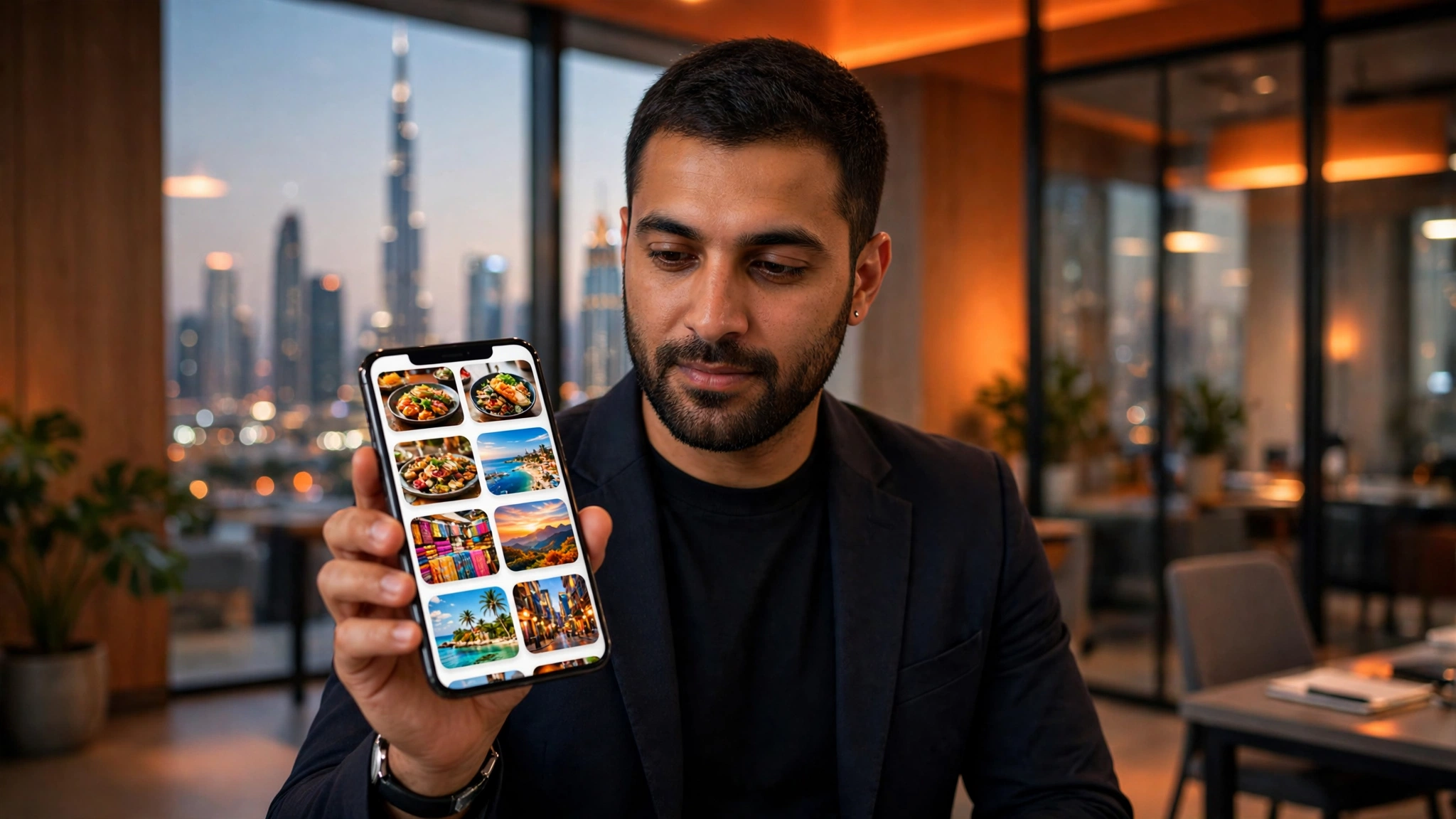
Discover sits inside the Google app and on the mobile home screen: a scrolling feed of cards, each carrying a headline, a source and usually a large image. A person opens it out of habit, not intent. That changes what wins. A search result wins by matching a query better than the page next to it. A Discover card wins by matching an interest — and by looking worth a tap without promising more than the page delivers.
For Dubai businesses, the opportunity is the content you already have reasons to publish: guides that help customers decide, explainers that answer the questions your sales team hears weekly, seasonal and city-relevant pieces, and product knowledge written by people who sell the product. Published properly, that content can work twice — once for the person who searches for it, and again for the much larger group who would never have searched but recognise the topic when the feed shows it to them.
How selection works
How Google Discover chooses what to show
No application, no keyword, no guarantee. Understanding the selection logic is what separates a Discover strategy from wishful publishing.
Eligibility comes first
A page must be indexed by Google and meet Discover’s content policies. That is the whole entry requirement — and it is automatic. If a page is blocked from indexing, thin, or policy-risky, no headline work will rescue it.
Interests do the targeting
Discover aligns topics with a person’s interests. Your job is topical clarity: publish consistently in subjects your business genuinely knows, so the system can learn what your site is an authority on, topic by topic.
Helpful-content systems still judge you
As part of Google Search, Discover uses many of the same signals and systems that judge helpful, reliable, people-first content. Pages written for a ranking trick rather than a reader fail the same test in both surfaces.
Fresh and evergreen both qualify
Timely content suits the feed, but Google notes older content can also appear when it is helpful and relevant to someone’s interests. A strong backlist is a Discover asset, not dead weight — provided its images and headlines meet the current bar.
One boundary matters for planning: Discover sits alongside search, it does not replace it. Our Google AI Overviews page covers how Google summarises answers inside results, and our zero-click searches page covers queries that end without a visit. Discover is the third pattern — no query at all. A sound content programme prepares for all three instead of betting the site on any single surface.
Why brands miss it
Six ways Dubai brands disqualify themselves from the feed
None of these require a bigger budget to fix. All of them are publishing habits.
Clickbait headlines
Google explicitly warns against misleading or exaggerated details in preview content and withholding the crucial information a reader needs. A headline that over-promises may win one tap and cost the site its feed trust.
Sensational framing
Content built on outrage, morbid curiosity or titillation is named directly in Google’s guidance as a tactic to avoid. Dubai brands with a professional reputation have the most to lose by copying it.
Small or generic images
A 600-pixel stock photo cannot carry a large feed card. Neither can a logo, which Google advises against using as the Discover image. If the image would not stop a thumb, the card will not either.
Large previews switched off
Restrictive image-preview settings quietly cap how your content can appear. Allowing large previews — the max-image-preview:large setting, or AMP — is a one-time technical fix many sites never check.
Publishing outside your expertise
Chasing every trending topic dilutes the topical signal. A clinic publishing celebrity news and a law firm publishing recipes teach the system nothing about what they are actually authoritative on.
Service pages dressed as stories
A sales page with a news-style headline is still a sales page. Discover rewards content people would choose to read; pages built only to convert rarely earn feed distribution, however they are titled.
The image system
The Discover image standard, applied properly
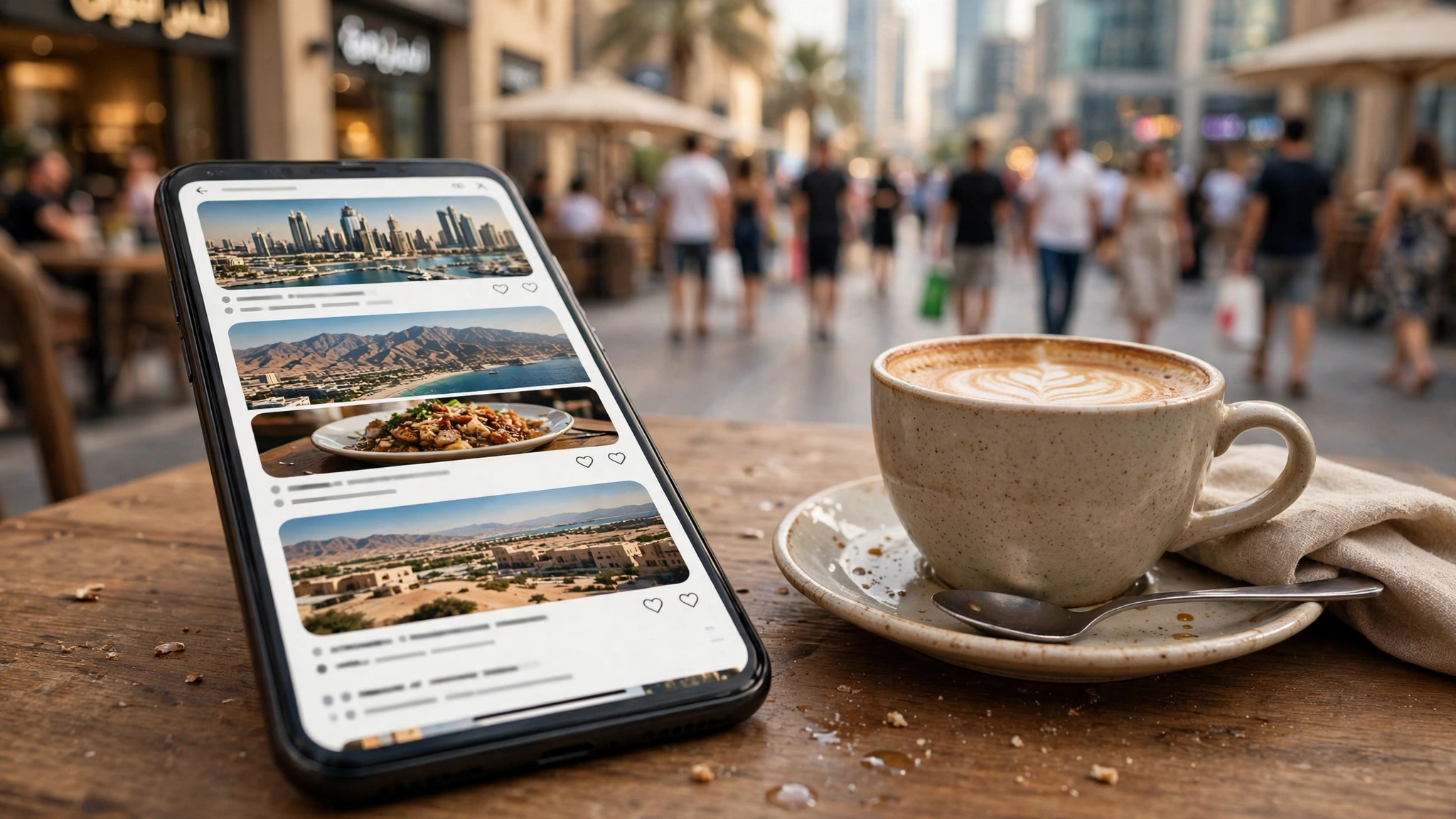
In search, the image supports the result. In Discover, the image is the result’s first impression. Treat it as a publishing standard, not an afterthought.
| Requirement | Google’s recommendation | How to run it |
|---|---|---|
| Width | At least 1,200 pixels wide | Set 1,200px as the minimum width for every featured and lead in-content image on new content; retrofit the strongest older pages |
| Total resolution | More than 300,000 total pixels | A 1,280 × 720 image gives 921,600 pixels — use 16:9 production sizes that clear the bar with room to spare |
| Aspect ratio | 16:9 | Shoot and crop for landscape feed cards; keep the important subject inside the safe centre of the frame |
| Preview permission | Enabled by max-image-preview:large, or by using AMP | Audit your robots meta settings once, site-wide, and confirm new templates do not reintroduce a smaller preview limit |
| Which image is named | Specified through og:image or structured data | Name one deliberate, representative image per page — never leave the choice to an automatic scrape of the page |
| What to avoid | Generic images such as a site logo; text-heavy graphics | Use a real, relevant photograph or illustration for the topic; keep text out of the feed image itself |
Not sure what state your current content is in? Our SEO audit checks image dimensions, preview settings and headline practice across your strongest pages, so the retrofit list is ordered by the content most likely to earn feed distribution first.
The playbook
The Google Discover playbook for Dubai brands, in order
Six steps. None of them is a submission. All of them compound.
01 · Confirm eligibility and technical health
Check the pages you care about are indexed, crawlable and policy-clean, and that large image previews are allowed. Eligibility problems are invisible in normal search reporting, so check them deliberately rather than assuming.
02 · Fix the image standard
Adopt the 1,200-pixel, 16:9 standard for new content, set the og:image deliberately on every page, and retrofit the backlist in order of quality — the best older guides first, because evergreen content can surface in the feed too.
03 · Rewrite headlines honestly
Audit titles and headlines for accuracy: does the headline capture the essence of the page, with nothing exaggerated, sensational or withheld? The Discover headline test is simple — a reader who taps should find exactly what was promised.
04 · Publish inside proven topics
Build a content rhythm in the two or three subjects your business can speak on with real experience. Timely pieces when the topic is current, story-led explainers and unique insight the rest of the time — consistency is how topical authority is learned.
05 · Add the Dubai and Arabic layer where it is real
Local relevance is a genuine edge: Dubai-specific angles, seasonal moments and properly written Arabic versions of your strongest content put you in front of feed interests that generic international publishers cannot match. Publish Arabic because the audience is there, not as a translation exercise.
06 · Measure the body of work, not the spike
Judge Discover over a run of content: which topics and image styles earn appearances, and which never do. Feed visibility is uneven by design, so a single quiet page proves nothing and a single spike proves little more. Patterns across ten pages are the signal worth acting on.

Pricing
What Google Discover SEO costs
Fixed pricing, published openly. Discover readiness is part of the content and technical programme — no feed-placement fee, because placement cannot be bought or submitted.
Foundation
AED 1,500/month
Core local SEO for one location: eligibility and preview-setting checks, the 1,200px image standard on new content, and headline practice fixed inside your monthly programme.
Growth
AED 3,500/month
Everything in Foundation plus a topic-led content rhythm built for feed and search together, backlist image retrofits, and Arabic versions of your strongest pieces.
Authority
AED 6,500/month
The full programme across topics and markets: Discover, search and AI-answer consistency, multi-topic authority building and reporting that separates feed patterns from spikes.
A detailed SEO audit starts from AED 1,499. The free 15-minute visibility review shows where your content currently stands for feed eligibility. Full tier details: SEO pricing in Dubai.
Key takeaways
The short version
There is no Discover submission. Indexed, policy-clean content is automatically eligible — anyone selling placement is selling something that does not exist.
Interest replaces the keyword. Discover matches topics to people, so topical expertise and consistency do the work targeting does in search.
The image carries the card. At least 1,200 pixels wide, 16:9, genuinely representative, with large previews allowed.
Honest headlines are a ranking asset. Clickbait and sensationalism are named in Google’s guidance as tactics to avoid — in the feed, trust is the strategy.
Evergreen counts. Older content can surface when it is helpful and relevant — retrofit your best pages instead of only chasing new ones.
Judge patterns, not spikes. Feed visibility is uneven by design; ten pages of evidence beat one page’s good week.
FAQ
Google Discover SEO — questions Dubai brands ask
Google Discover SEO is making your content a strong candidate for Google Discover — the personalised feed in the Google app and on mobile that shows people articles and pages matched to their interests, without them typing a search. There is no Discover submission, tag or schema requirement: content is automatically eligible once it is indexed by Google and meets Discover’s content policies. The work is therefore about eligibility plus quality — helpful, people-first content in topics your site genuinely knows, honest headlines, and large, relevant images that can carry a feed card.
You cannot submit content to Discover, and no one can guarantee a place in the feed. Google selects content automatically for each person’s interests from pages that are indexed and meet its content policies. You raise your chances by doing the things Google’s own guidance names: publish timely content that tells a story well or offers unique insight, use titles that capture the essence of the page without clickbait, avoid sensational tactics, and include compelling, high-quality, relevant images — ideally at least 1,200 pixels wide. Eligibility is the floor; expertise and usefulness are what get a page chosen.
Google recommends large images for Discover: at least 1,200 pixels wide, more than 300,000 total pixels, and a 16:9 aspect ratio — a 1,280 by 720 image, for example, comfortably clears the total-pixel bar. Large previews also need to be allowed, through the max-image-preview:large robots setting or AMP. Name the image you want used through og:image or structured data, choose one that genuinely represents the page, and avoid logos and text-heavy graphics — Google advises against both as the feed image.
No. News performs strongly because it is timely, but Discover carries a wide range of topics matched to a person’s interests — guides, advice, explainers, product knowledge, local interest and evergreen content included. Google also notes that older content can appear when it is helpful and relevant to someone’s interests. For a Dubai business, that means a well-made guide, a seasonal explainer or a genuinely useful how-to can be a Discover candidate. What it cannot be is a thin service page with a sales headline — the feed rewards content people would choose to read, not pages built only to convert.
Search answers a query someone typed; AI Overviews summarise an answer inside the results. Discover works the other way round: there is no query. Google shows content because it matches interests it has inferred for that person, so you cannot rank for a Discover keyword the way you rank for a search term. The quality bar overlaps — Discover uses many of the same systems Search uses to judge helpful, reliable, people-first content — but the presentation is different: a visual card, led by a large image and a headline, competing on interest rather than intent.
Because the feed is personal and interest-led, Discover visibility is naturally uneven. A page can be shown widely while a topic is current for many people, then fade as interests move on — that pattern is normal for the surface and is not, on its own, a penalty or a technical fault. Treat Discover as an additional distribution channel on top of search, not a replacement for it: keep the search foundations (indexing, helpful content, clean technical health) sound, publish consistently in your proven topics, and judge Discover over a body of content rather than a single page’s spike.
Discover readiness sits inside our fixed retainers: Foundation AED 1,500/month, Growth AED 3,500/month, Authority AED 6,500/month. A detailed SEO audit starts from AED 1,499, and the free 15-minute visibility review shows how your content currently stands for feed eligibility — image sizes, preview settings and headline practice — before you commit to anything. There is no separate Discover fee and no one should charge you for a Discover submission, because no submission exists.
Free AI Visibility Audit
See whether your content is even eligible for the feed — before you publish more of it
We check indexing, image sizes, preview settings and headline practice across your strongest pages, then show you exactly what to fix first. Drop your details and we will run the audit.
Google Discover SEO Dubai
Your next customer may never search for you. Be in the feed they open instead.
Eligibility is free and automatic. Earning the tap — with expertise, images and headlines that respect the reader — is the work.
Last updated: 2026 · Reviewed by Liaquat Ali, SEO Specialist