AI SEO Workflow Tools Pricing & ROI Buyer’s Guide 2026
Most businesses don’t lose money because they chose the “wrong AI tool.” They lose money because they buy software without a workflow, publish without measurement, and report rankings that have no connection to calls, enquiries, or revenue. This guide fixes that.

Quick Answer: What Is the Best Way to Buy AI SEO Workflow Tools?
The best way to buy AI SEO workflow tools is to map your SEO process from research to publishing to monitoring, identify the bottleneck that blocks leads or revenue, then choose tools that integrate with Google Search Console, GA4, your CMS, and your reporting stack. Calculate ROI as revenue lift plus time saved minus total tool cost — including seats, credits, overages, and setup time. For UAE businesses, the north star is simple: more calls, WhatsApp enquiries, booked appointments, Google Maps visibility, and AI search citations — not vanity dashboards or AI content volume.
What You Need to Know Before Paying for SEO Automation
What Counts as an AI SEO Workflow Tool?
You already know what an SEO tool is. The word most buyers skip past is workflow. That word determines whether the software creates business value or becomes another login that nobody opens by month three.
The label matters far less than the outcome. An AI SEO workflow tool can be a traditional platform, an AI content system, a crawler, a reporting dashboard, a task automation layer, or a custom stack that connects Google Search Console, GA4, WordPress, and Slack. What matters is whether it produces faster decisions, cleaner execution, and measurable results.
At Ali SEO Services, we judge tools by one question: does this help the business get more qualified enquiries with less wasted motion? If it only creates another dashboard, another login, and another weekly meeting to discuss the dashboard, it’s stack clutter — not a growth tool.
The Four Jobs Every SEO Workflow Must Do
Before evaluating any tool, map your workflow to these four functions. If a tool only addresses one and ignores the others, be careful about building your stack around it.
- Find demand you can win: search trends, competitor gaps, buyer intent signals, local modifiers, technical constraints, and AI answer opportunities across Google, Perplexity, and ChatGPT.
- Ship assets that satisfy intent: service pages, content hubs, internal links, schema markup, technical fixes, product and category improvements, and local landing pages.
- Earn and protect trust: brand consistency, citations, review signals, backlinks, digital PR, E-E-A-T (Experience, Expertise, Authoritativeness, Trustworthiness) signals, and factual accuracy.
- Measure and iterate: clicks, calls, leads, rankings, AI citations, crawl health, content decay rates, conversion rate trends, and revenue attribution.
AI SEO Tool Category Reference
| Tool Category | What It Does | Best Use Case |
|---|---|---|
| Visibility platforms | Keyword research, competitor tracking, backlinks, rank monitoring, site audits, and SERP feature analysis. | Building market intelligence and identifying where and why competitors are winning in search. |
| AI content systems | Briefs, outlines, optimization scoring, NLP checks, internal linking suggestions, and content refresh workflows. | Scaling high-quality pages without turning the site into a low-value AI content farm that erodes rankings. |
| Technical SEO automation | Crawling, log analysis, indexation checks, Core Web Vitals monitoring, structured data QA, and template issue detection. | Surfacing the hidden technical issues that quietly block rankings and conversion rate improvements. |
| Workflow orchestration | Task routing, content approvals, CMS pushes, SEO alerts, team notifications, and process automation. | Reducing manual handoffs and keeping SEO execution moving across distributed teams and agencies. |
| Analytics connectors | Connects GSC, GA4, CRM, call tracking, and WhatsApp data into practical reporting and next-action outputs. | Proving whether SEO activity is creating real enquiries, calls, and attributable revenue growth. |
Where AI Helps Most in SEO Workflows
The best AI SEO tools don’t simply “write content faster.” They compress decision cycles. That’s the real advantage — and the right obsession when evaluating any tool in this category.
Planning cycles shrink when AI clusters topics intelligently, drafts detailed briefs, surfaces entity gaps, and identifies competitor content angles before a human ever opens a blank document. Production cycles shrink when AI helps generate page variants, rewrites weak intros, improves FAQ depth, produces schema markup drafts, and standardizes internal linking patterns at scale. Iteration cycles shrink when AI-powered monitoring flags content decay, keyword cannibalization, broken template patterns, ranking drops, or sudden SERP changes before they show up as a painful traffic decline in GA4.
Here’s where most teams go wrong: they treat AI as a writer rather than an operating layer. A serious AI SEO workflow connects strategy, execution, and measurement. It helps the team decide what to do next, understand why it matters for revenue, and verify whether the last action actually worked.
Need an AI SEO workflow built for leads?
Ali SEO Services designs AI-ready SEO systems for UAE businesses — connecting Google Search, Google Maps, AI Overviews, ChatGPT, Perplexity, technical SEO, content architecture, and ROI reporting into one measurable growth roadmap.
How Tool Categories Fit an End-to-End SEO System
Most buyers shop by brand name. Experienced operators shop by bottleneck. The right question is never “which tool is popular right now?” The right question is: which step in our SEO process is the most direct blocker of revenue growth?
For a UAE service business, that bottleneck is often poor Google Maps visibility — the business doesn’t appear in the local pack for high-intent searches, so phone calls go to competitors. For an e-commerce store, it’s usually weak category pages with thin copy and poor internal linking. For a B2B brand, it’s often no entity authority and zero presence in AI Overview citations. For a WordPress site with legacy architecture, it might be Core Web Vitals failures, indexation issues, or duplicate template content suppressing ranking potential.
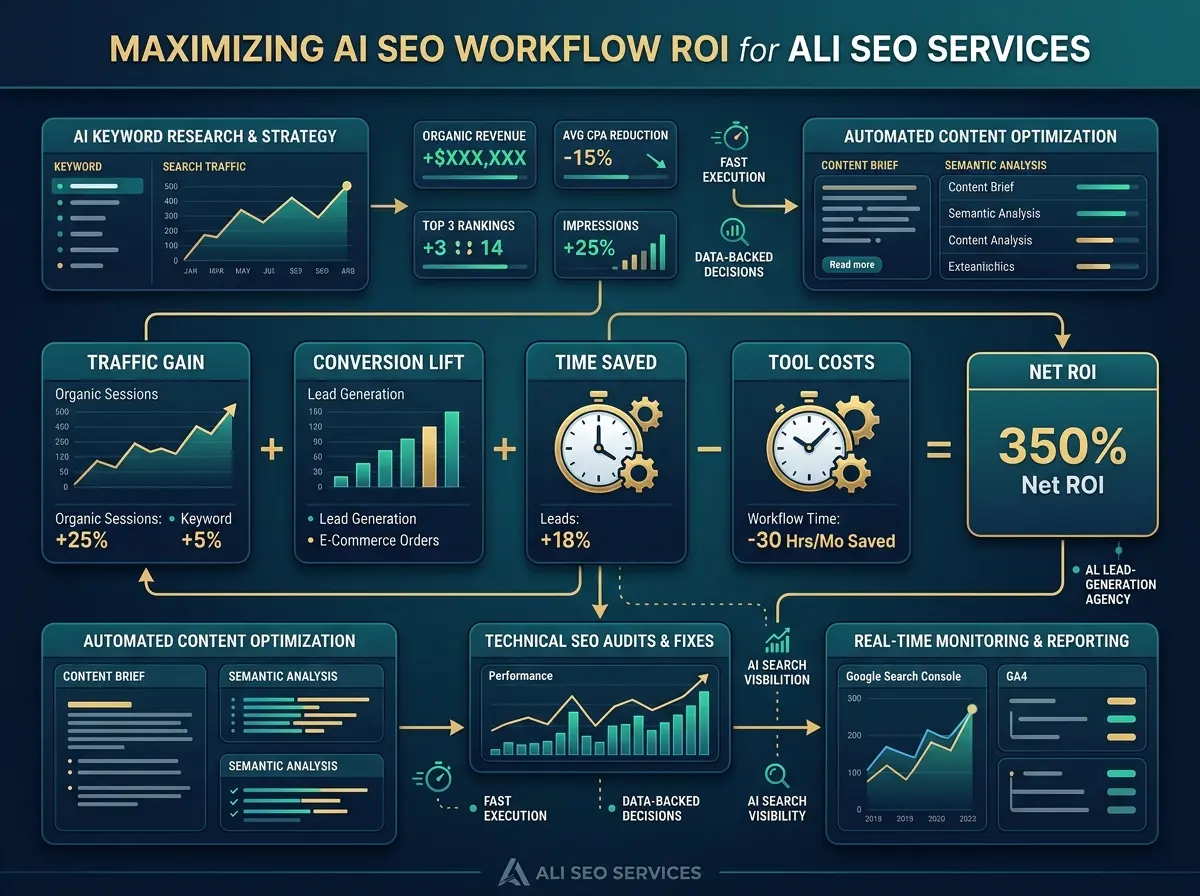
Stage 1: Research and Planning
Premium SEO tooling still earns its keep in research. You need clean competitor sets, full keyword universes, backlink signal analysis, real search demand data, SERP intent mapping, and an audit motion that doesn’t rely on someone’s memory of last quarter.
The failure mode is when research stays trapped inside platform dashboards. Real research becomes tickets, briefs, experiments, page updates, and technical fixes within the same week — not a slide in a monthly report that nobody acts on.
Stage 2: Production and Optimization
Content production used to be “write, publish, pray.” In 2026, it should be a controlled pipeline: keyword intent confirmed → brief drafted → expert reviewed → on-page optimized → internal links added → schema applied → images optimized → CTA tested → QA completed → published → monitored → refreshed on a schedule.
That discipline is especially important for AI content strategy and SEO copywriting. More content is not the competitive advantage in 2026. Better structure, clearer direct answers, stronger entity signals, and conversion-focused copy are. See our UAE SEO case study showing 217 to 2,520 clicks in 28 days to understand what structured execution looks like in practice.
Stage 3: Monitoring and Iteration
Monitoring is where mature teams separate themselves from teams stuck in reporting theatre. Rankings matter — but the real question after any ranking movement is: what changed downstream? Did CTR improve? Did call volume increase? Did the page earn a citation in Google AI Overviews? Did Maps visibility move? Did lead quality from organic actually improve?
For tracking AI search presence specifically, our AI search optimization (GEO) guide covers how to measure and improve citation visibility across Google, Perplexity, and ChatGPT. And for understanding zero-click SERP behavior that affects how traffic is counted, read our guide on zero-click searches in the UAE.
How to Compare AI SEO Tool Pricing Without Getting Surprised
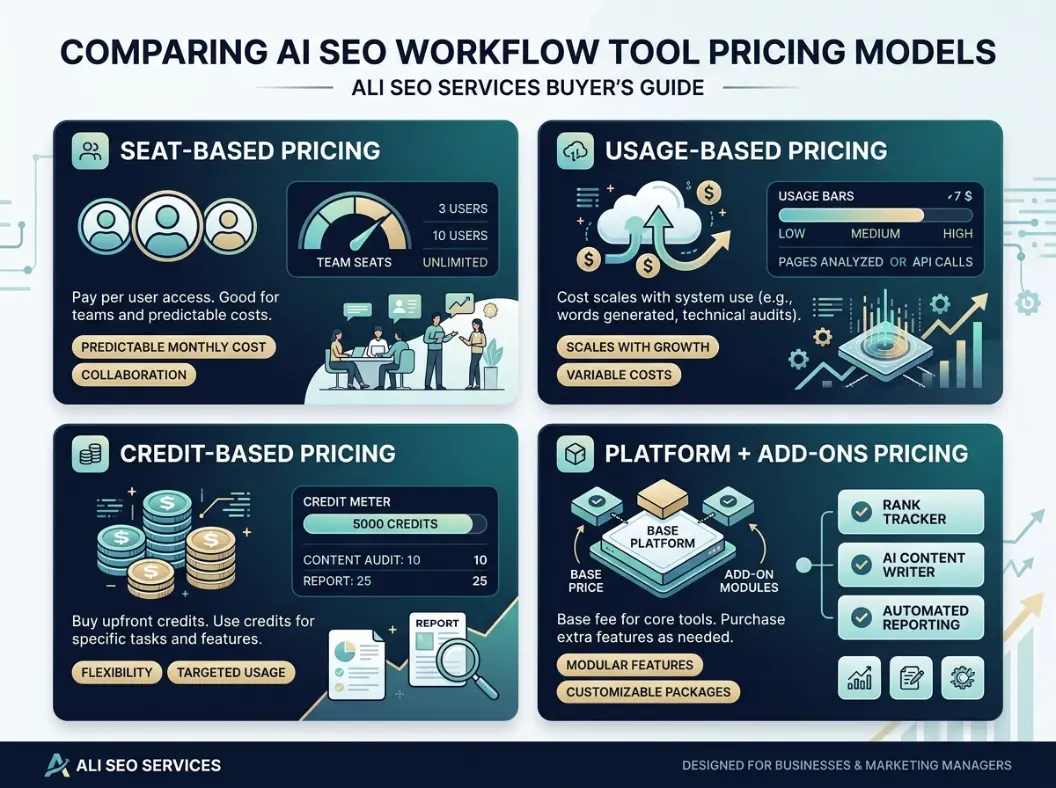
SEO software pricing used to be mostly subscription plus implementation services. In 2026, you’re also navigating seat plans, credit bundles, usage meters, crawl limits, AI generation credit pools, dashboard add-ons, project caps, API access tiers, and overage fees that arrive like a bad invoice surprise at the end of the month.
Before you compare tools feature by feature, compare pricing models. This is where most businesses think they’re buying a small, predictable monthly tool and later discover they bought a growing cost center that nobody budgeted for properly.
How much do AI SEO workflow tools cost? Lean startup stacks can run under $100/month. SMB stacks with a real platform, content tooling, and some agency support typically land in the $500–$10,000/month range. Enterprise SEO operations — including enterprise platforms, specialist agencies, and internal team costs — can exceed $25,000/month when counted honestly. See our SEO pricing guide for Dubai for a UAE-specific breakdown.
| Pricing Model | What It’s Good For | Where It Bites You | Ask Before Buying |
|---|---|---|---|
| Seat-based | Stable monthly budget and predictable team access. | Paying full price for light users who log in twice a month. | Can we add reviewers or stakeholders without paying full seats? |
| Usage-based | Cost scales with real output rather than team headcount. | Bills spike sharply during audit sprints, content testing, or crawl-heavy months. | Which exact actions consume usage credits and at what rate? |
| Credit bundles | Flexible experimentation across audits, briefs, articles, and crawls. | Credit math is often opaque; overages arrive without warning. | What does one credit buy in plain business terms? What triggers overages? |
| Platform + add-ons | Enterprise breadth with modules added by specific need. | API access, project history, crawl volume, and reports all become extra line items fast. | What’s included in base, and what will we realistically need within 90 days? |
| Agency + tools bundled | Strategy, execution, and tool management combined under one relationship. | Weak agencies hide behind dashboard reports instead of business outcomes. | Who owns the actions, the reporting, and the business results? How is accountability structured? |
Hidden Costs Most Teams Miss
- Implementation time: setup, integrations, permission structures, reporting configuration, and internal training are rarely counted in the “price.”
- Workflow ownership: someone must decide what gets acted on and what gets deprioritized. Without that person, tools generate insight that sits unused.
- Content review overhead: AI-generated drafts still require fact-checking, brand tone alignment, commercial claims review, and expert input before publishing.
- Overlap and stack waste: three tools may all “score content,” but none may own the feedback loop from GSC to refresh tickets — so work duplicates without improving outcomes.
- Governance as you scale: access controls, data handling agreements, audit logs, and approval workflows matter significantly more as your team and content volume grow.
Use This Scorecard Before You Buy Any AI SEO Tool
A scorecard sounds corporate. Good — buying software for a growth system deserves that rigor. Score each tool from 1 to 5 across these areas before the sales demo steers the decision. If a tool scores high on “impressive demo” and low on integration, governance, and reporting, treat that as a red flag.
| Scorecard Area | What a 5/5 Looks Like | Red Flag to Watch |
|---|---|---|
| Business impact | Demonstrably improves lead generation, conversion insight, execution speed, or revenue attribution within 30–60 days. | Promises more content output or prettier dashboards with no conversion or lead attribution layer. |
| Integrations | Native connections with GSC, GA4, CMS, CRM, project management, and communication tools — without CSV exports as the primary data transfer method. | Requires manual data exports for any meaningful workflow step. No API or webhook access at reasonable price points. |
| Governance | Supports approval workflows, granular roles, audit logs, data retention controls, and human factual review before content ships. | Unclear or vague answers about where your business data goes, how it’s stored, or who can access it. |
| Workflow fit | Matches how your team already plans, publishes, and reports — with an adoption path that doesn’t require a complete process rebuild. | Forces everyone into a new process with no owner assigned and no clear transition from current workflow. |
| Reporting depth | Connects SEO actions to rankings, organic traffic, calls, leads, AI search citations, and measurable revenue contribution. | Reports only keyword rankings or generic health scores with no connection to business outcomes. |
| Pricing clarity | Transparent limits, predictable cost at your actual usage level, and clear overage rules before you sign — not just headline pricing. | Pricing requires a demo and still feels unclear after two calls. “It depends” is the dominant answer. |
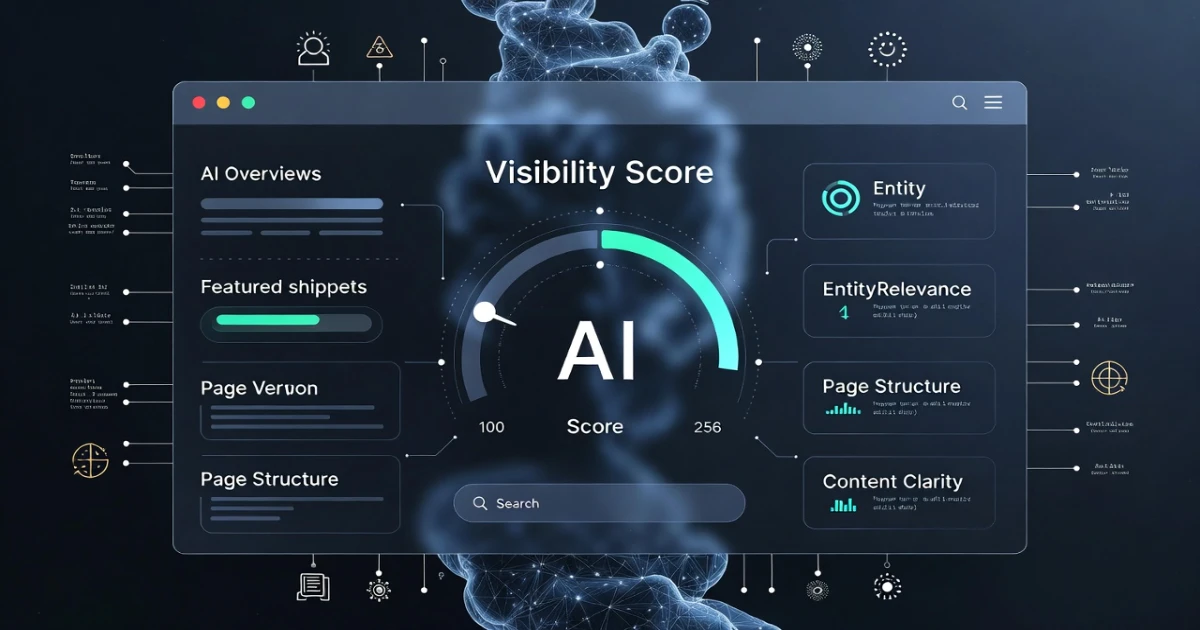
| AI citation readiness | Helps structure content to be cited in Google AI Overviews, Perplexity, and ChatGPT — not just optimize for traditional ranking signals. | No mention of entity optimization, structured data, or GEO (Generative Engine Optimization) in the tool’s framework. |
Ali’s rule: If a tool cannot reduce cycle time or improve lead attribution within the first 30–60 days of real use, it should not be the center of your stack — regardless of how impressive the demo was.
Choose the Right AI SEO Stack by Business Size
Early-stage teams should not buy enterprise platforms out of ambition or insecurity. That’s a tax on momentum — money and management bandwidth that should be in growth execution. Start with the workflow change that creates the most measurable progress in the shortest time.
For many UAE businesses, the highest-ROI stack isn’t complicated: technical cleanup, local SEO infrastructure, service-page content architecture, AI answer readiness, conversion tracking, and a reporting dashboard that makes the right next decision obvious. That’s exactly why our SEO and AEO services are built around lead growth and measurable attribution — not keyword rankings as an endpoint. For UAE businesses wanting to understand entity authority specifically, our entity-based SEO guide explains how Google’s Knowledge Graph affects search trust.
Need to quantify the business case internally? Use our SEO ROI justification tool to build a defensible investment model before committing to any tool or agency relationship.
How to Calculate AI SEO Tool ROI: A Simple 5-Step Formula
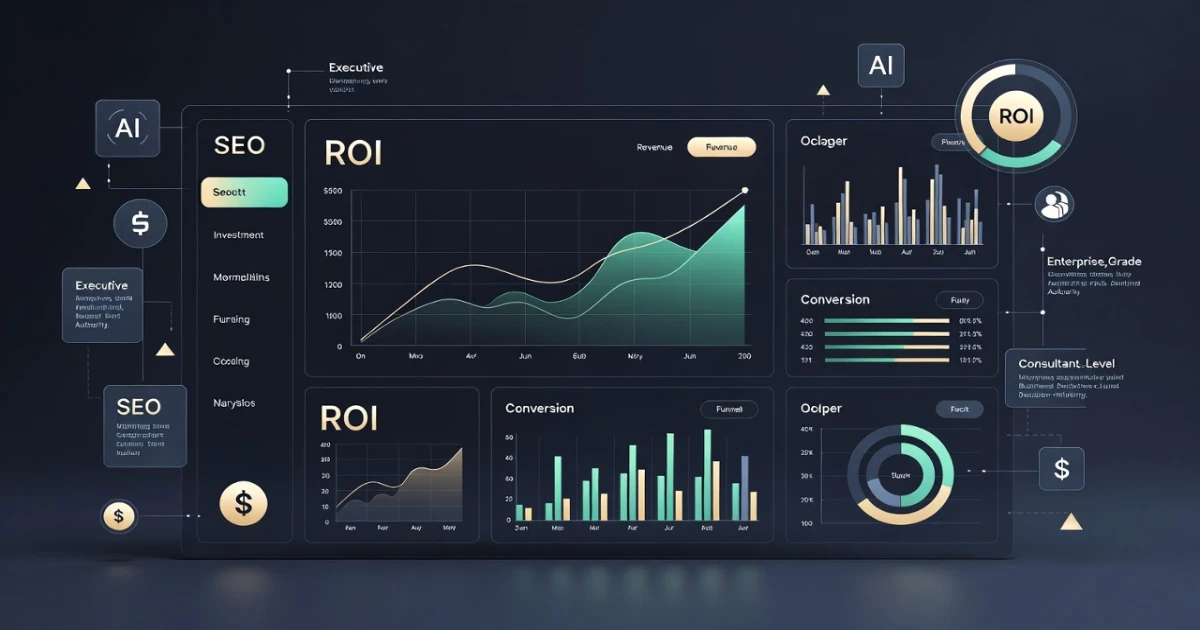
ROI conversations around SEO tools get mystical fast — full of estimates, benchmarks, and industry averages that don’t map to your actual business. Don’t let that happen. You need two buckets: revenue lift and cost reduction. Then subtract the full, honest stack cost — including the people time spent running the tools — and you have a defensible number.
| Variable | What You Input | Why It Matters |
|---|---|---|
| Monthly organic sessions gained | 90-day trailing lift from GSC or GA4, compared against the pre-tool baseline. | Shows whether organic visibility is genuinely moving — not just fluctuating. |
| Organic conversion rate | Your actual organic conversion rate (calls, form fills, WhatsApp clicks) — not industry benchmarks. | Turns visibility data into business value. Industry averages don’t reflect your offer, audience, or sales process. |
| Value per conversion | Lead value, average sale value, booking value, or lifetime value contribution per organic conversion. | Prevents SEO from becoming a traffic exercise disconnected from revenue reality. |
| Monthly revenue lift | Sessions gained × conversion rate × value per conversion. | The revenue side of the ROI model. This is the number that gets budget approved. |
| Hours saved monthly | Briefing, audits, reporting, content refreshes, QA, monitoring, and technical checks combined. | Measures real productivity gain — not theoretical efficiency from a vendor’s case study. |
| Blended hourly cost | Loaded wage (salary + benefits + overhead), agency rate, or internal equivalent cost per hour. | Converts hours saved into money saved for the ROI calculation. |
| True tool costs | Subscriptions + credit bundles + seat fees + add-ons + usage charges + overages + setup time. | Shows the real monthly cost — not the headline plan price from the sales page. |
| Net ROI | (Revenue lift + cost reduction) − true tool costs. | The number you can present in any serious business or investor discussion without hedging. |
Worked Example: Dubai Clinic
A private clinic in Dubai implements an AI SEO workflow and gains 1,200 incremental organic sessions per month, confirmed in GSC. Their organic conversion rate is 4% (calls and WhatsApp enquiries). Each qualified enquiry is valued at AED 250 based on average case conversion data.
That’s AED 12,000 in potential monthly lead value. The workflow also saves 18 hours per month across research, brief writing, reporting, and refresh scheduling — valued at AED 150/hour, adding AED 2,700 in time efficiency. If the full tool stack costs AED 2,200/month including all seats and credits, estimated net monthly value is AED 12,500 before compounding.
That’s the kind of calculation worth presenting. “We published 40 AI articles this month” is not.
What UAE Businesses Should Prioritize First
For UAE businesses, search visibility is not just a ranking problem — it’s a lead-flow problem with a specific journey. The buyer path typically moves from Google Search to Maps to WhatsApp to a booked call or clinic appointment. That means your workflow tools and strategy must support local discovery, trust building, and frictionless conversion — not just position tracking.
If your business depends on calls or enquiries in Dubai, Abu Dhabi, Sharjah, Ajman, Ras Al Khaimah, Fujairah, or Umm Al Quwain, prioritize tools and workflows that improve these specific areas first:
- Google Business Profile optimization and Maps rankings — visibility where high-intent UAE buyers are actively searching for your service category right now.
- Service-page quality and conversion-focused CTAs — pages that satisfy buyer intent clearly and direct to WhatsApp, call, or booking without friction.
- AI Overviews readiness, entity clarity, and answer-first content — structured pages that AI systems can confidently cite as authoritative answers.
- Technical SEO health and Core Web Vitals — the foundation without which all other improvements compound poorly.
- Call tracking, WhatsApp lead attribution, and enquiry source clarity — knowing which page and which keyword drove the conversion call.
- Arabic and English content where both audiences are being served — not just translation, but intent-matched content for each language’s search behavior.
This is where a founder-led SEO system outperforms random tool shopping. The stack should serve the commercial strategy — not replace strategic thinking with software dashboards. For UAE businesses new to AI search, our AI SEO services overview explains how we connect all of these layers into a single measurable growth system.
AI SEO Workflow Tools: Frequently Asked Questions
Are AI SEO workflow tools worth paying for if I’m early-stage?
Yes — if the tool helps you ship better pages faster, measure what worked, and avoid over-hiring too early. No — if it only helps you publish more average content with no clear workflow, governance, or conversion tracking layer. At the early stage, start with a simple stack: one keyword research tool, one CMS, GSC, and GA4. That’s enough to generate real results before layering in more.
What is the biggest reason AI SEO workflow tools fail to deliver ROI?
Underutilization. Teams buy tools because the demo looks impressive, but nobody owns the workflow. Without clear ownership — someone who decides what gets acted on and what doesn’t — the tool becomes shelfware within 60 days. The second most common failure: tools that track rankings but don’t connect to leads, calls, or conversions. Those tools optimise for the wrong metric from the start.
Should I buy an all-in-one SEO platform or build a modular stack?
All-in-one platforms work best when one tool becomes the genuine system of record and your team uses it consistently for research, execution, and reporting. Modular stacks work better when integrations are clean and the workflow is already disciplined. Most teams should start by solving the highest-value bottleneck first — a single, well-chosen tool that fixes the most expensive problem — then expand the stack intentionally as the workflow matures.
What metrics should I report to prove SEO tool ROI?
Report organic leads, qualified enquiries (calls, WhatsApp, forms), conversion rate by landing page, revenue contribution, Google Maps visibility growth, AI citation frequency across Google and Perplexity, content decay rate, time-to-publish, and time-to-refresh. Rankings are an important leading indicator but should never appear alone in a serious ROI discussion. The question is always: did the ranking change produce a lead change?
How do I measure AI Overview and ChatGPT citations?
Track them as a distinct visibility layer separate from traditional organic. Monitor branded search volume in GSC for indirect signal of AI citation impact. Use manual checks across AI platforms for your key queries. Track assisted conversions in GA4 — sessions that started from branded search after a user saw your brand cited by an AI system. Our guide on AI search optimization and GEO covers the full measurement framework.
How much should a UAE SMB spend on an AI SEO tool stack?
Most UAE SMBs with a serious lead-growth goal spend between AED 1,500–8,000 per month on their combined tool and agency/specialist cost. The right number depends entirely on the revenue opportunity — a business targeting AED 100,000/month in new revenue should be able to justify significantly higher investment than one targeting AED 10,000. Always calculate expected ROI before setting the budget, not after. See our Dubai SEO pricing guide for a detailed breakdown by business type.

About the Author: Liaquat Ali
Liaquat Ali is an AI SEO, AEO, SGE, and Local SEO specialist with 6+ years helping UAE businesses generate qualified calls, WhatsApp enquiries, and booked appointments through Google Search, Google Maps, and AI-powered discovery. He has delivered 120+ SEO campaigns across Dubai, Abu Dhabi, Sharjah, and the wider GCC. Every recommendation is tied directly to visibility, trust signals, and lead quality — not vanity metrics or dashboard impressions. Learn more about Liaquat →
Want an AI SEO Workflow That Actually Produces Leads?
Ali SEO Services helps UAE businesses build practical, measurable search systems across Google, Google Maps, AI Overviews, ChatGPT, Perplexity, service pages, technical SEO, content architecture, and ROI reporting — so visibility turns into calls, WhatsApp enquiries, and booked opportunities.
Enjoying our SEO & AI search insights?
Make AliSEOservices.com a Preferred Source on Google to see our SEO, AEO, local search and AI visibility insights more prominently in your Google experience.