Entity-based SEO is a search strategy that defines a brand’s identity through its relationships with recognized people, places, and concepts. Moving beyond keyword matching, it allows AI systems to interpret your site’s expertise and authority with mathematical certainty. In 2026, this structured clarity is the primary foundation for visibility in AI Overviews and voice search results.
Entity-Based SEO focuses on strengthening those relationships so that search engines and AI systems can interpret brand identity, expertise, and factual accuracy more reliably.
This guide explains:
- What entity-based SEO is
- How knowledge graphs function
- Practical implementation steps
- Measurement frameworks
- Integration with AEO, GEO, and voice search
- Common misconceptions and limitations
The goal is clarity and implementation—not promotion.
1. What Is Entity‑Based SEO?
Definition:
Entity-based SEO is the practice of structuring content and data so search systems can clearly identify and connect distinct entities (people, organizations, products, services, locations, concepts) and understand their relationships.
An entity is a uniquely identifiable thing. In search systems, entities are typically stored in structured databases such as Google’s Knowledge Graph.
Traditional keyword optimization focuses on matching phrases.
Entity optimization focuses on meaning and relationships.
Both still matter.
2. Why Entities Matter in 2026 Search Systems
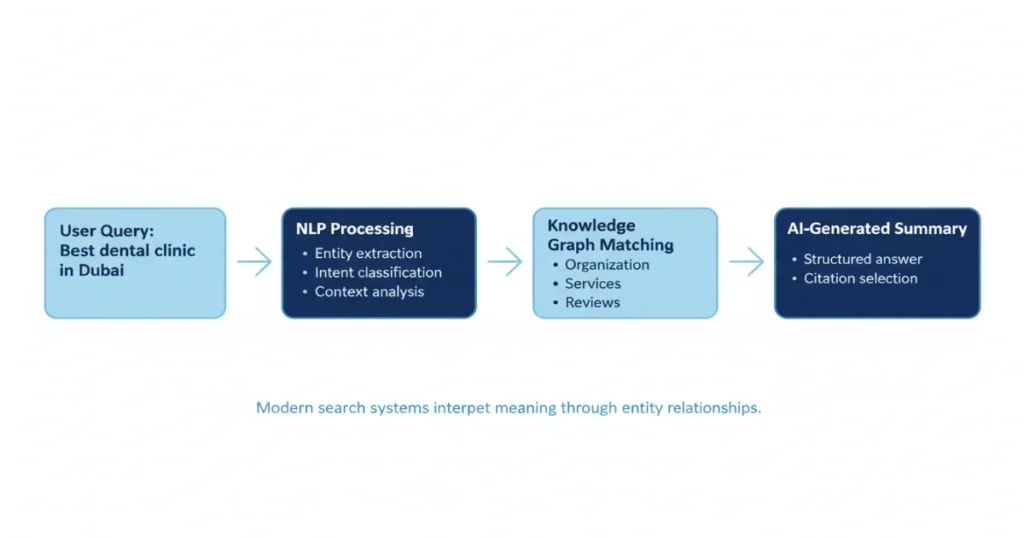
Modern search relies on multiple components:
- Knowledge Graph (entity relationships)
- Natural Language Processing (entity extraction and salience)
- Vector embeddings (semantic similarity)
- AI-generated summaries (contextual synthesis)
- Structured data interpretation (Schema.org)
Google has publicly described the Knowledge Graph as a system that connects facts about people, places, and things to improve understanding beyond keywords.
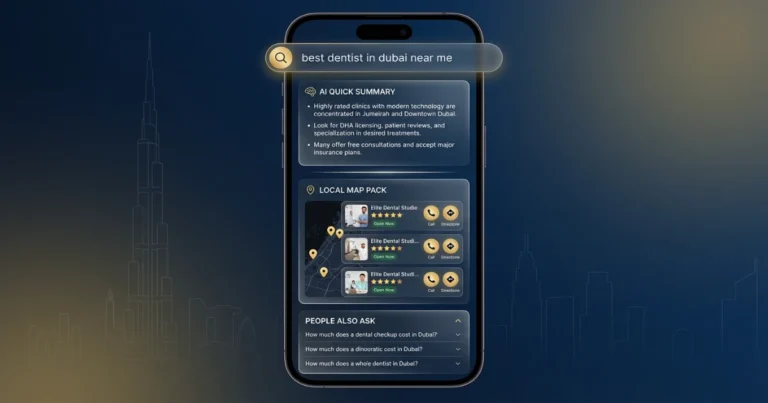
AI-generated summaries (such as Google AI Overviews) synthesize information from multiple sources. Inclusion in such summaries depends on:
- Topical authority
- Clarity of factual signals
- Structured consistency
- Content quality
- Relevance
- Trust signals
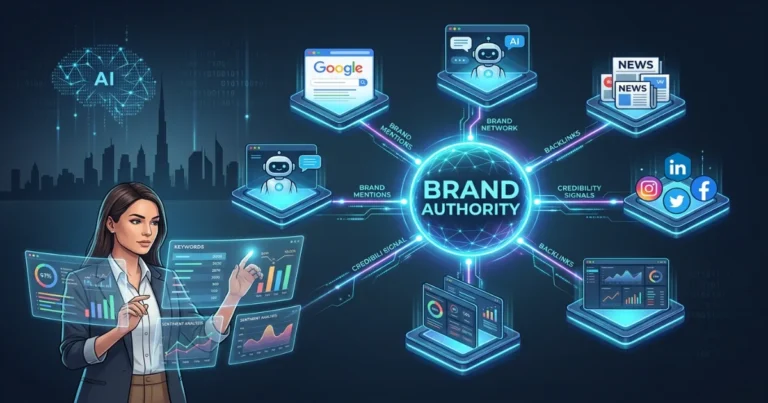
Entities contribute to this process, but they do not replace traditional ranking factors like backlinks, page quality, or user experience.
3. What Is a Knowledge Graph?
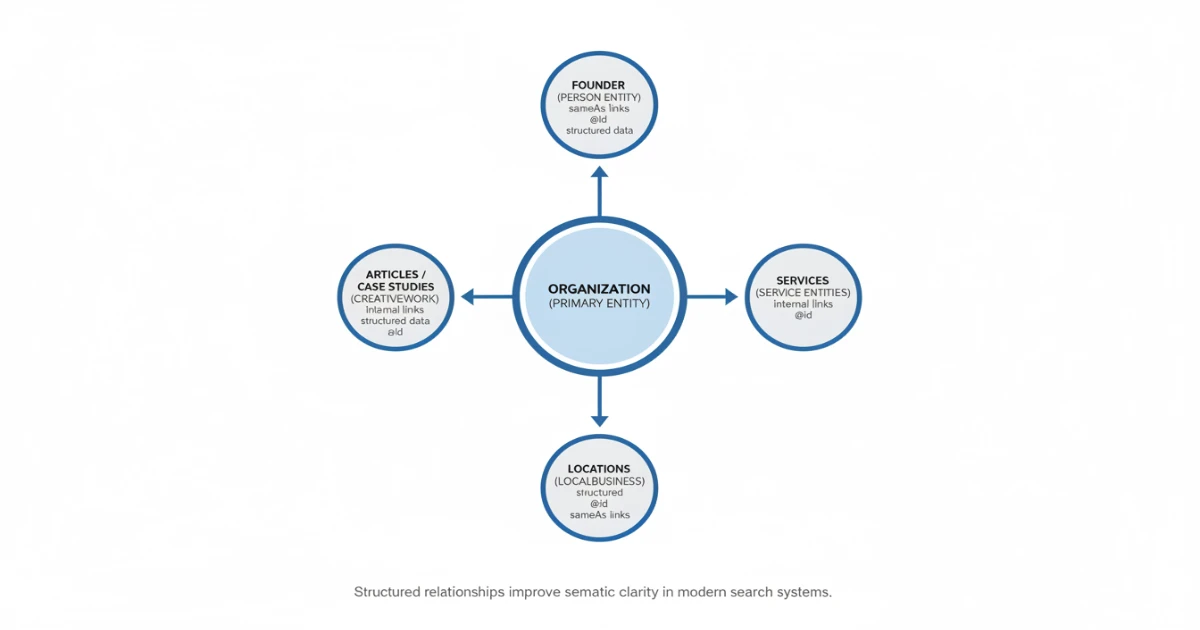
A knowledge graph is a structured network of entities and their relationships.
Example:
Organization
→ Founder
→ Services
→ Locations
→ Awards
→ Publications
Instead of treating web pages as isolated documents, search systems map structured connections between these entities.
This allows them to answer questions such as:
- Who founded this company?
- What services does it offer?
- Where is it located?
- What topics is it associated with?
Google’s structured data documentation explains how schema markup supports content understanding:
https://developers.google.com/search/docs/appearance/structured-data
4. Core Components of Entity Optimization
4.1 Entity Identification
Identify your primary entities:
- Organization
- Founder or key personnel
- Services or products
- Locations
- Case studies or publications
Where possible, reference canonical identifiers:
- Wikidata entries
- Official social profiles
- Google Business Profile
- Industry registries
The goal is consistency and clarity.
4.2 Structured Data Implementation
Structured data using Schema.org vocabulary helps search engines interpret page meaning.
Common schema types include:
- Organization
- LocalBusiness
- Person
- Service
- Product
- Article
Example (simplified):
{
  "@context": "https://schema.org",
  "@type": "Organization",
  "@id": "https://example.com/#organization",
  "name": "Example Company",
  "url": "https://example.com",
  "sameAs": [
    "https://www.linkedin.com/company/example",
    "https://www.wikidata.org/wiki/Q12345"
  ]
}
Important principles:
- Use consistent naming.
- Include @id values.
- Link to authoritative profiles using sameAs.
- Ensure visible content aligns with structured data.
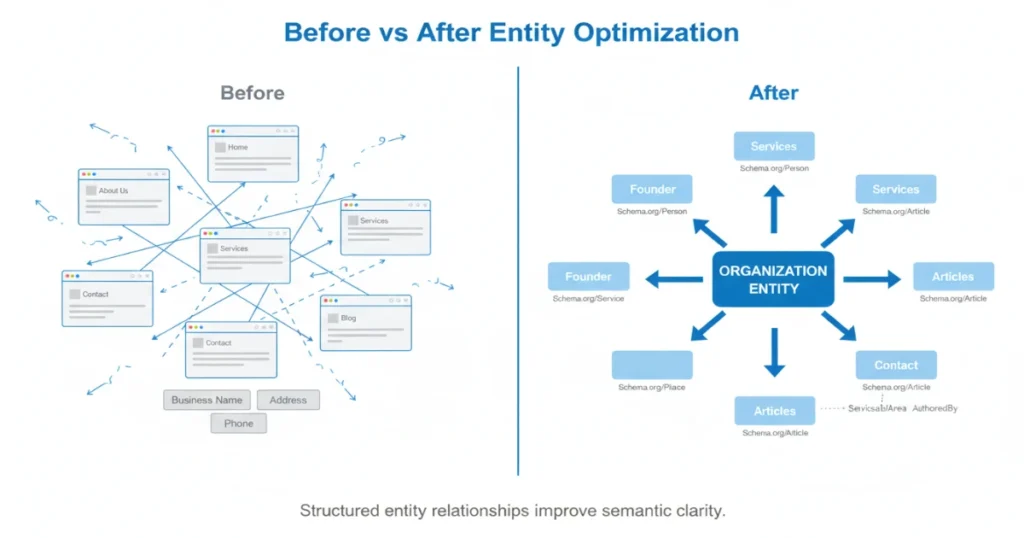
Structured data does not guarantee rankings, but it improves clarity and eligibility for enhanced features.
4.3 Internal Relationship Mapping
Internal linking should reflect entity relationships.
For example:
- Service pages link to the organization entity.
- Author pages link to related articles.
- Location pages link to relevant services.
This mirrors the structure of knowledge graphs.
4.4 NAP Consistency (For Local Entities)
For local businesses, consistent:
- Name
- Address
- Phone number
across website and directories remains important.
Inconsistent data can create ambiguity in entity association.
5. Measuring Entity Optimization
Entity performance cannot be measured by rankings alone.
Consider multiple indicators:
5.1 Entity Extraction
Use tools such as:
- Google NLP API
- Other NLP extraction tools
Evaluate which entities are extracted from your page and their salience scores.
5.2 Semantic Similarity
Using embeddings, compare:
- Your page content
- Authoritative entity descriptions
Higher similarity can indicate stronger topical alignment.
5.3 Structured Data Validation
Validate with:
- Rich Results Test
- Schema Markup Validator
Ensure there are no implementation errors.
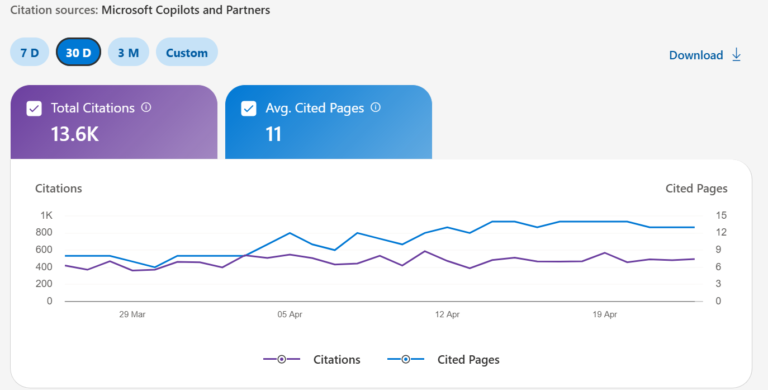
5.4 Visibility in AI Summaries
Monitor:
- AI-generated search summaries
- Branded query behavior
- Impressions in Search Console
AI inclusion fluctuates and depends on many variables beyond structured data alone.
6. Integration with AEO, GEO, and Voice Search
6.1 AEO (Answer Engine Optimization)
Entity clarity supports answer extraction by:
- Defining the main subject of a page
- Aligning headings with entity intent
- Providing concise definitions
However, content quality and query relevance remain critical.
6.2 GEO (Generative Engine Optimization)
Generative systems synthesize answers from multiple sources.
Clear entity relationships increase the likelihood that your brand is recognized accurately within that synthesis.
Still, generative inclusion depends on:
- Authority
- Context
- Trust signals
- Topical depth
6.3 Voice Search
Voice queries frequently involve:
- Local intent
- Factual questions
- Direct answers
Structured LocalBusiness schema and consistent business data support eligibility for voice-based responses.
7. Common Misconceptions
“Keywords are dead.”
Incorrect. Keywords still signal user intent and remain essential.
“Schema guarantees AI citations.”
False. Structured data improves clarity but does not override authority signals.
“AI doesn’t read pages.”
Oversimplified. AI systems analyze content, extract entities, and evaluate context through multiple layers of processing.
“Knowledge graph optimization replaces backlinks.”
It does not. Links still contribute to authority.
Entity SEO enhances clarity; it does not replace core ranking factors.
8. Practical Implementation Framework
A neutral five-step model used by many agencies:
- Identify core entities.
- Align visible and structured signals.
- Implement consistent schema.
- Reinforce relationships through internal linking.
- Monitor entity extraction and AI visibility.
This is not proprietary—it reflects common best practices discussed in modern semantic SEO literature.
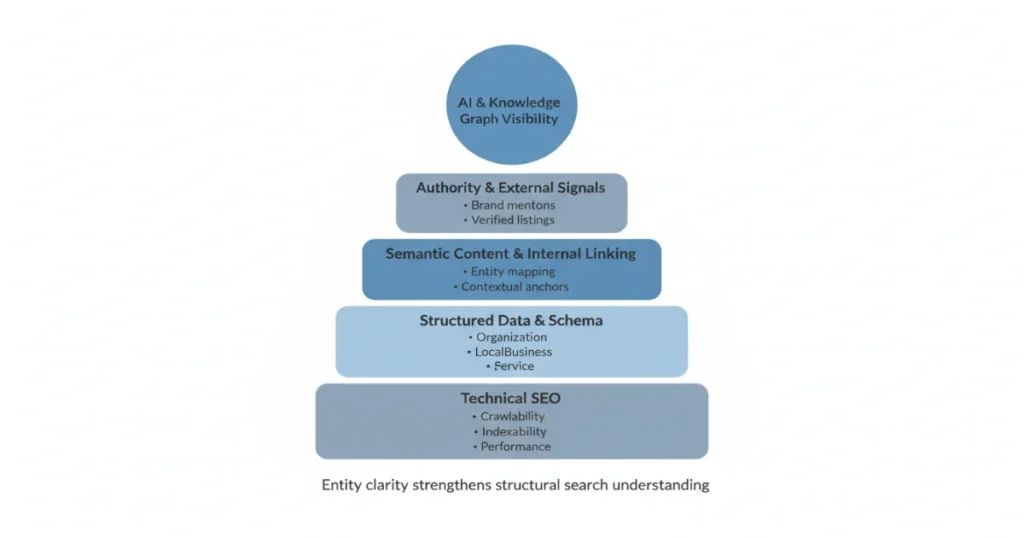
9. Limitations of Entity‑Based SEO
- Requires ongoing data maintenance.
- Structured data may not be used immediately.
- AI summary visibility is not fully transparent.
- Results vary by industry and competition level.
- Over-optimization can lead to unnatural content.
Entity optimization is part of a broader SEO system, not a standalone strategy.
10. Final Words On Entity‑Based SEO
Search in 2026 has moved past simple keywords toward a deeper understanding of meaning and relationships. Entity-based SEO is the bridge that helps search engines interpret who you are, what you provide, and your place within your industry’s ecosystem.
It doesn’t replace high-quality content or technical performance; it provides the semantic clarity needed to fuel AI-generated summaries and Knowledge Graph accuracy. In an AI-first world, entity clarity isn’t a shortcut—it’s the structural foundation for long-term resilience.
Need to map out your digital footprint? Ali SEO Services specializes in building the structured relationships your brand needs to stay visible and authoritative.
FAQs for Entity-Based SEO (2026)
1️⃣ What is entity-based SEO?
Entity-based SEO is the practice of optimizing content around clearly defined entities—such as people, organizations, products, and concepts—so search engines understand relationships and meaning rather than relying only on keyword matching.
2️⃣ How does a knowledge graph improve SEO?
A knowledge graph improves SEO by structuring factual relationships between entities. This helps search systems interpret brand identity, services, and expertise more accurately, supporting eligibility for enhanced features and AI-generated summaries.
3️⃣ Is entity-based SEO replacing keyword optimization?
No. Keyword optimization remains important for signaling user intent. Entity-based SEO complements keywords by improving semantic clarity and contextual relationships within search systems.
4️⃣ What is an entity in Google’s Knowledge Graph?
An entity in Google’s Knowledge Graph is a uniquely identifiable object—such as a person, place, organization, or concept—stored with attributes and relationships to other entities.
5️⃣ Does schema markup guarantee inclusion in AI Overviews?
No. Schema markup improves machine readability and clarity but does not guarantee inclusion in AI-generated summaries. Authority, relevance, and content quality remain essential factors.
6️⃣ How do you identify core entities for a website?
Core entities typically include the organization, founder or key personnel, services or products, locations, and related publications. These should be consistently defined across content and structured data.
7️⃣ What tools help measure entity optimization?
Common tools include Google’s Natural Language API for entity extraction, Schema Markup Validator for structured data testing, and Search Console for impression and query analysis.
8️⃣ How does entity SEO support voice search?
Voice search systems often rely on structured factual data, especially for local queries. Clear LocalBusiness schema and consistent entity information improve eligibility for voice-based responses.
9️⃣ What is the difference between semantic SEO and entity SEO?
Semantic SEO focuses on contextual meaning and topic depth, while entity SEO emphasizes defining and structuring identifiable entities and their relationships. In practice, both strategies overlap significantly.
🔟 Why is entity clarity important for AI-generated search results?
AI-generated search systems synthesize information from multiple sources. Clear entity definitions and structured relationships help ensure accurate representation within those synthesized responses.
Enjoying our SEO & AI search insights?
Make AliSEOservices.com a Preferred Source on Google to see our SEO, AEO, local search and AI visibility insights more prominently in your Google experience.