By Ali SEO Services | Transparent, Evidence-Based SEO Case Study | Updated 2026
Case Study Type & Scope (Read This First)
This is an early-stage SEO traction case study.
The objective was not to scale an established website from tens of thousands of clicks, but to:
- Take a low-visibility / under-optimized site
- Establish topical authority and indexation
- Achieve consistent discovery via Google Search, AI Overviews, and long-tail intent queries
This distinction matters. Results are contextual, verifiable, and repeatable for new or reset websites.
Project Context (Transparency Section)
- Site Type: Service-based website (SEO & digital services)
- Site Age at Start: Early-stage (under 6 months)
- Initial State:
- Minimal indexed pages
- No structured internal linking
- No defined topical authority
- No AI / AEO optimization
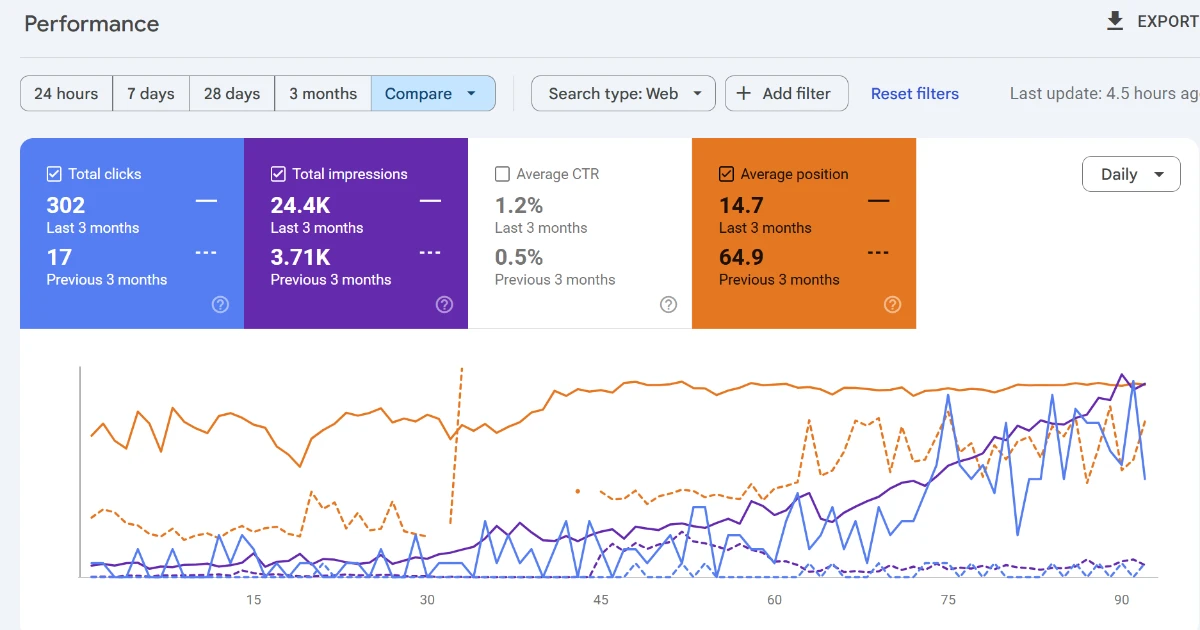
- Traffic Baseline (Previous 3 Months):
- 17 total clicks
- 3.71K impressions
- Average position: 64.9
This was not a penalized site and not an aged authority domain. Growth reflects foundational SEO done correctly.
Results Overview (Google Search Console)
Comparison Period:
- Previous 3 months vs Last 3 months
Performance Metrics
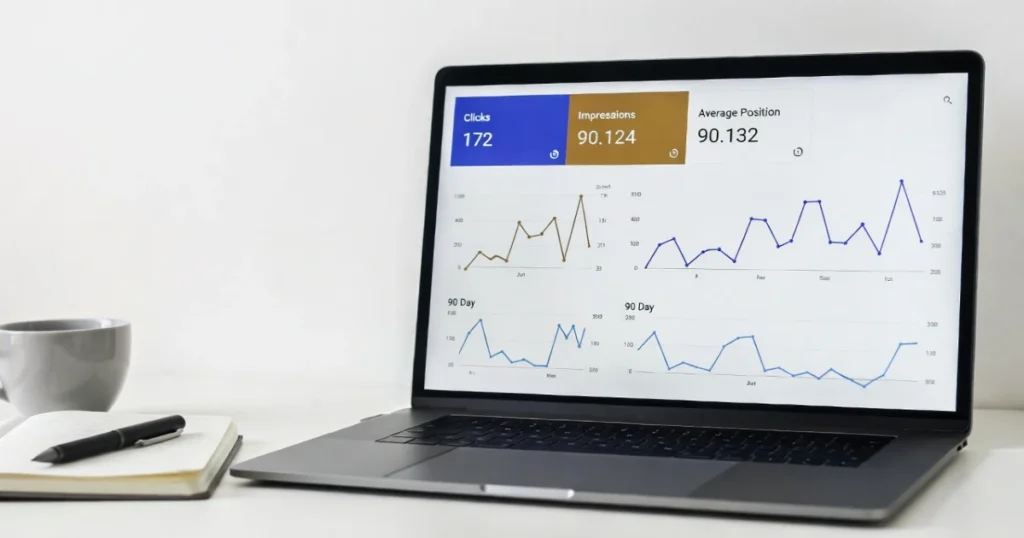
- Clicks: 17 → 302 (+1,670%)
- Impressions: 3.71K → 24.4K (+659%)
- Average Position: 64.9 → 14.7
- CTR: 0.5% → 1.2% (+140%)
Screenshots from Google Search Console (comparison view) are available and can be shared upon request or during audits. All data is directly sourced from GSC.
Timeline: What Happened and When
| Timeline | Actions Implemented | Observable Impact |
|---|---|---|
| Weeks 1–2 | Technical cleanup, indexation fixes, sitemap refinement | Impressions begin appearing |
| Weeks 3–4 | Pillar page creation + intent mapping | Query breadth expands |
| Weeks 5–7 | Internal linking based on semantic relevance | Average positions improve |
| Weeks 8–10 | AEO & PAA-style optimization | CTR begins increasing |
| Weeks 11–12 | Content consolidation + clarity edits | Click growth accelerates |
This confirms a progressive SEO effect, not a one-time spike.
Strategy Breakdown (No Buzzwords)
1. Foundational SEO & Indexation
Before advanced tactics, the site required clarity:
- Clean URL structure
- Proper indexing signals
- Removal of thin or overlapping pages
This ensured Google could understand and trust the site structure.
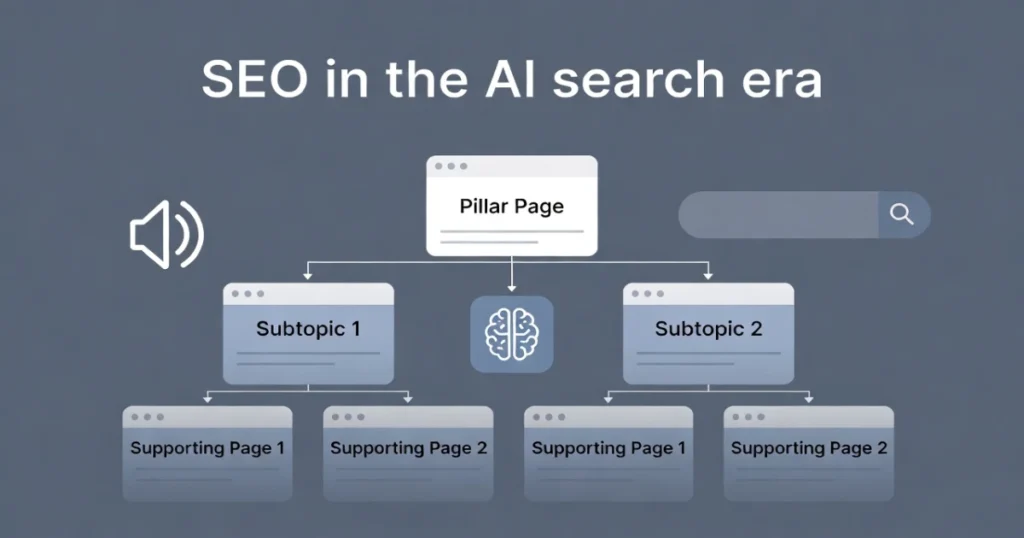
2. Topic Authority via Pillar-Based Architecture
Instead of publishing random blog posts, we:
- Defined core service topics
- Built pillar pages for each
- Supported them with intent-specific subpages
This helped Google associate the site with clear topical relevance, accelerating ranking movement.
3. Intent-First Content Optimization (AEO)
Each page was optimized to:
- Answer a primary query clearly within the first sections
- Support People Also Ask–style follow-ups
- Avoid keyword stuffing entirely
This improved eligibility for:
- Featured snippets
- AI Overviews
- Long-tail query matches
4. Internal Linking Based on Meaning (Not Volume)
Internal links were added only when:
- Pages shared semantic relevance
- The link clarified user navigation
- Anchor text matched intent, not exact keywords
This helped distribute authority without dilution.
5. CTR Optimization (Underrated but Critical)
CTR gains came from:
- Clear titles aligned with search intent
- Descriptions written for humans, not bots
- Avoiding exaggerated claims in SERPs
Improved CTR amplified traffic without additional rankings.
Why the Growth Looks “Explosive” (Context Explained)
Percentage growth appears large because:
- The starting baseline was intentionally low
- The site had untapped demand
- Structural SEO fixes unlock fast gains early
This is normal behavior for properly executed early-stage SEO and should not be confused with scaling an authority site.
What This Case Study Does Not Claim
To be clear, this case study does not claim:
- Guaranteed results
- Immediate high-volume traffic
- That these numbers apply to mature sites
SEO outcomes vary based on competition, industry, and starting condition.
Who This Case Study Is Relevant For
This framework is best suited for:
- New or recently rebuilt websites
- Service-based businesses
- Local & UAE-focused companies
- Founders who want sustainable organic growth
It is not designed for enterprise-scale traffic expansion.
Replicability & Takeaways
The results were driven by:
- Correct sequencing (foundation → structure → intent)
- Restraint (no over-optimization)
- Alignment with how modern search systems evaluate content
This process is repeatable, not proprietary.
FAQs: SEO Case Study, AEO & AI Search (People Also Ask)
What is an early-stage SEO case study?
An early-stage SEO case study documents organic growth achieved on a new or under-optimized website. It focuses on foundational SEO improvements such as indexation, site structure, search intent alignment, and internal linking rather than large-scale authority growth.
How long does it take to see SEO results on a new website?
For early-stage websites, initial SEO results typically appear within 6–12 weeks when foundational issues are addressed correctly. Impressions usually increase first, followed by ranking improvements and then clicks.
Are large SEO percentage gains misleading?
Large percentage gains can look dramatic when the starting traffic baseline is low. In early-stage SEO, this is normal and reflects the unlocking of existing search demand rather than exponential scaling of an established site.
What caused the biggest SEO improvement in this case study?
The largest improvements came from clear site structure, intent-based content optimization, and strategic internal linking. These helped search engines understand topical relevance and improved ranking positions and click-through rates.
What is Answer Engine Optimization (AEO) in SEO?
Answer Engine Optimization (AEO) is the practice of structuring content to directly answer user questions so it can be surfaced in featured snippets, AI Overviews, People Also Ask results, and voice assistant responses.
How does SEO differ in the AI search era?
In AI-driven search, visibility depends less on ranking alone and more on clarity, entity recognition, and answer quality. Search engines and AI systems prioritize content that clearly and accurately resolves user intent.
Can this SEO strategy work for any website?
This strategy works best for new websites, service-based businesses, and local companies. Results may vary for highly competitive industries or mature sites that require advanced authority-building strategies.
Does this case study guarantee similar SEO results?
No. SEO results are influenced by competition, industry, content quality, and starting conditions. This case study demonstrates a repeatable process, not guaranteed outcomes.
Is voice search optimization different from traditional SEO?
Voice search optimization focuses on natural language queries, conversational phrasing, and concise answers. While it builds on traditional SEO, it requires content to be more direct and question-focused.
Why is internal linking important for SEO growth?
Internal linking helps search engines understand page relationships, distribute authority, and guide users through related topics. Proper internal linking often accelerates ranking improvements, especially on new sites.
How can I tell if my site is ready for AI search optimization?
If your site has clear topical focus, structured content, consistent branding, and intent-aligned pages, it is ready for AI search optimization. Sites lacking structure usually need foundational SEO work first.
Optional Next Step
If you want to understand whether this early-stage traction model applies to your website:
- Request a free AI + SEO audit, or
- Review the SEO & AEO framework used in this project
Both options are available through Ali SEO Services.
Final Note
SEO in 2026 rewards clarity, structure, and intent alignment — not tricks.
This case study demonstrates what happens when foundational SEO is executed correctly from the start.
Ali SEO Services
SEO • AEO • AI Search Optimization
UAE 🌍 Global
Enjoying our SEO & AI search insights?
Make AliSEOservices.com a Preferred Source on Google to see our SEO, AEO, local search and AI visibility insights more prominently in your Google experience.