SEO for Tourism · Dubai · UAE
SEO for Tourism Companies in Dubai: Win the Booking, Not the Commission
A traveller searching “desert safari Dubai” opens three or four tabs — and most of them belong to marketplaces. Every booking through an OTA hands over a share of the ticket that should have been your margin. SEO for tourism is the discipline of ranking your own booking pages so the traveller finds you first — in their language, in the season they book — and books direct.
- Direct bookings, not OTA fees
- Safaris · cruises · yachts · tours
- EN + AR + RU + ZH
- Season-timed content
Quick answer
What is SEO for tourism companies? It is search optimisation organised around how travel is booked: experience-intent pages for each tour, safari, cruise or charter, multilingual page sets in the guest’s language, Google Business Profile and Maps presence for experience operators, review proof that feeds both rankings and AI answers — measured in direct bookings, not traffic. Hotels are a separate discipline: see our SEO for Hotels in Dubai page. This page is for tour, travel and experience operators.
A tour operator invisible on its own experience searches is not invisible to travellers — it is visible on someone else’s listing, at commission.

Safaris · Cruises · Yachts · DMCs
Programmes built per experience type — not one tourism template
Direct booking first
Every page engineered to sell the seat, not feed the marketplace
4 languages
English, Arabic, Russian and Chinese page sets where your guests actually search
Season-timed
Winter peak, Dubai Shopping Festival, Ramadan and summer each get their calendar
The definition
What is SEO for tourism companies?
A method page, not a sector landing page: how travel search actually works for Dubai operators — and the order to build in.
SEO for tourism companies means structuring a tour operator’s, travel agency’s, DMC’s or experience provider’s search presence around the booking journey: experience-intent pages for every tour, safari, dhow cruise and yacht charter you sell, multilingual page sets in the languages your guests search, Google Business Profile and Maps presence for experience operators, review proof that compounds into rankings and AI citations, and citable answer blocks that AI trip planners can quote — measured in direct bookings rather than raw visits. This page covers tour, travel and experience operators. Hotels are a separate discipline with their own search behaviour, covered on our SEO for Hotels in Dubai page.
A Dubai operator usually arrives with the same problem in different words: the experiences are excellent, the reviews on the marketplace listings are strong, and the website ranks for the company name — plus nothing else. Every other search for what the company sells lands on a marketplace listing, a rival, or an aggregator article. That is not a traffic problem. It is a page-set problem: the searches that produce direct bookings were never given pages to land on, so the marketplace collects the booking and the commission.
The fix follows the booking journey. Travellers search the experience first — desert safari Dubai, dhow cruise Dubai Marina, yacht charter Dubai price — then compare two or three options, then check reviews and timing, then book. SEO for tourism builds one page per experience for the first step, comparison and FAQ content for the second and third, and the shortest possible booking path for the fourth. This page sets out that method: the Dubai market facts, the OTA layer, the keyword map, GBP and Maps, seasonality, the content programme, the conversion path, AI citations and multilingual build — in build order.
The market
Why Dubai tourism search behaves differently
Tourism SEO copied from another destination fails here. Four structural facts shape every search your guests make.
01 · The discovery layer belongs to marketplaces
Viator, GetYourGuide, TripAdvisor and Klook rank for the generic experience searches — “desert safari Dubai”, “dhow cruise”, “things to do in Dubai” — because travellers trust one checkout for an unfamiliar city. Every ticket sold through them carries a commission that comes out of your margin. Competing head-on for those exact terms is a long, expensive game; the winning move is to own your experiences, your languages, your brand searches and the comparison content that points travellers to your own booking page.
02 · The booking window is short
Unlike hotels booked months ahead, activities are often booked days before the trip — or after landing, on hotel Wi-Fi. Season pages, clear availability and a booking path that works on a phone in a taxi matter more than a deep blog archive. Pages that answer “can I book this for tomorrow” win money pages; pages that philosophise about travel do not.
03 · The guest searches in their own language
Dubai’s arrivals search in English for planning — and in Arabic, Russian and Chinese for huge, high-spending segments that book differently. An English-only operator is invisible for entire layers of demand, including the quote and booking searches. Wherever your own bookings and WhatsApp enquiries arrive in another language, that language’s page set is a revenue page.
04 · AI now plans the itinerary
ChatGPT, Gemini and AI Overviews assemble Dubai itineraries from cited sources — “plan 3 days in Dubai” returns an itinerary with named experiences. The operator cited in that answer gets the booking without a click contest. The operators never cited are never in the shortlist. Citation readiness — answer blocks, schema, reviews, entity consistency — is now part of the job.
One more fact that changes the calendar: Dubai tourism is seasonal in a way few destinations are. The winter peak, the Dubai Shopping Festival, Ramadan and the summer heat each reshape what guests search and when they book. A tourism programme that publishes the same pages all year fights the season; one that times content to it rides it. The seasonality table below sets the calendar.
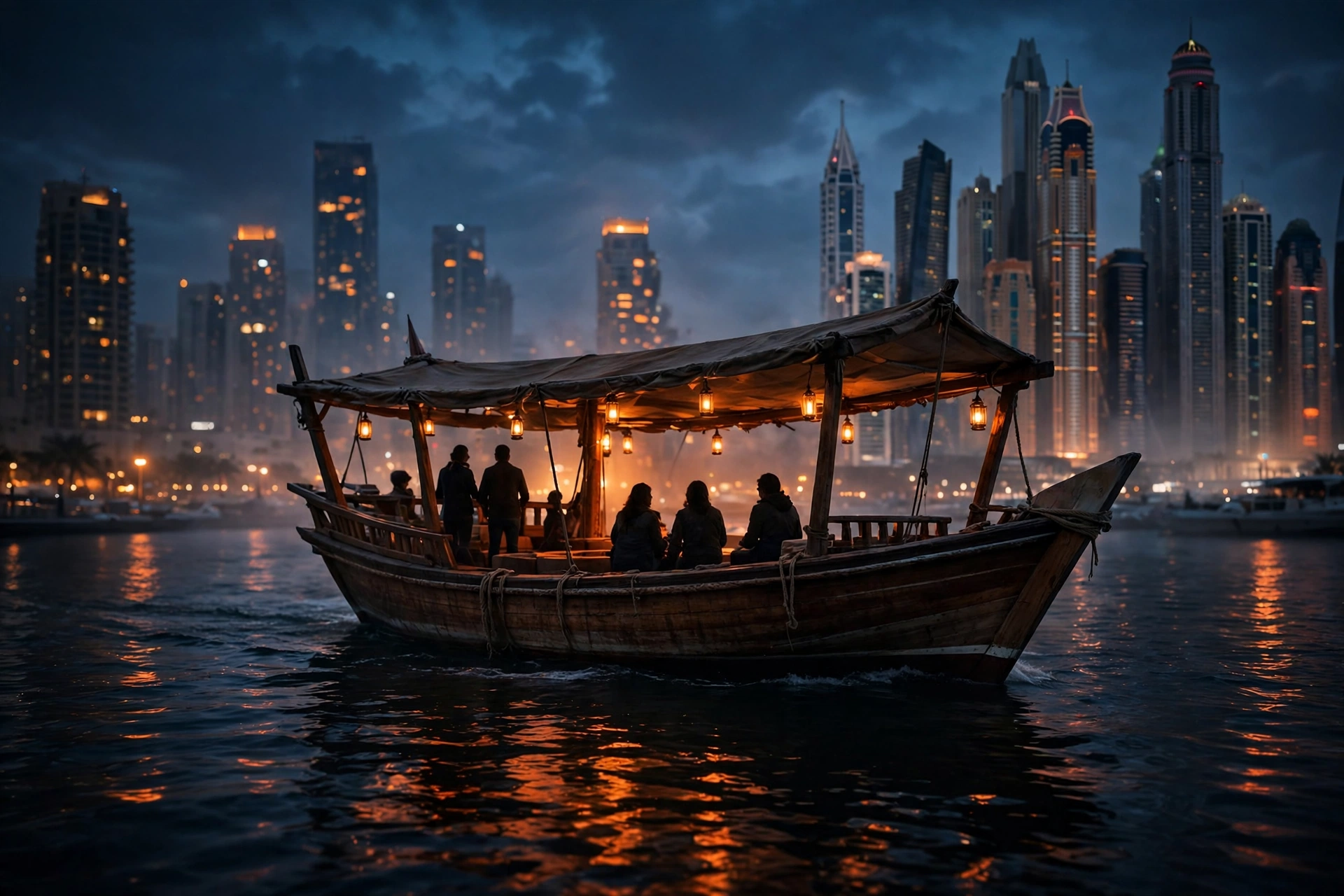
The commission trap
How tour operators lose bookings to OTAs — and take them back
Marketplaces are a channel. The problem is when they are your only channel.
For a first-time visitor, Viator or GetYourGuide is the safe choice: one checkout, familiar brand, reviews in one place. That convenience is exactly why the traveller stays there — your desert safari listed next to six rivals, compared on price and star rating, booked at a commission that leaves your account with the platform. The listing also keeps the reviews, the guest data and the repeat booking. You get the seat filled and the margin thinned.
| What happens | Booked on a marketplace | Booked direct on your site |
|---|---|---|
| The margin | A share of every ticket goes to the platform | The full ticket value stays with you |
| The reviews | Reviews live on the marketplace’s listing and lift the marketplace | Reviews build your Google profile and feed AI citations naming you |
| The guest relationship | The platform owns the guest; the next trip starts on the platform | You own the email, the WhatsApp thread and the rebooking path |
| Price presentation | Your experience sits beside every rival, compared on price alone | Your story, your inclusions, your upgrades — sold on value, not the lowest fare |
The answer is not to delist — marketplaces are a legitimate discovery channel, and many operators keep them while shifting the mix. The answer is to make direct booking the path of least resistance: one experience page that answers every pre-booking question, from-prices and inclusions stated plainly, live availability, a WhatsApp button for the guest who wants a human answer, and a booking flow shorter than the marketplace’s. Every percentage point of bookings that moves from marketplace to direct is margin recovered permanently.
Price parity matters here. Guests check. If your own site shows a higher price than your marketplace listing, the direct page is decoration. Direct pages should carry the best available price — or a genuine direct-booking benefit the marketplace cannot copy, like a flexible reschedule, a free upgrade, or a bundled add-on.
The keyword map
The experience keyword and intent map for Dubai
Five experience clusters, three intents. Build book-intent pages first; plan-intent content second.
| Search cluster | Intent | The page that wins it |
|---|---|---|
| Desert safari Dubai | Book intent, season-driven | One safari experience page: inclusions, pickup areas, evening timing, reviews, the shortest path to a seat |
| Dhow cruise Dubai Marina / Dubai Creek | Compare intent | One page per route — Marina and Creek compared honestly, each selling its own cruise |
| Yacht charter Dubai price | Quote intent | Charter page with from-prices, vessel sizes, inclusions and a WhatsApp quote path — quotes close on chat |
| Dubai city tour / half-day tour | Plan intent | Itinerary pages with the route, stops, duration and pickup zones — the page a planner forwards to the group |
| Dubai attraction tickets & experiences | Fast book intent | Attraction pages with clear availability and the shortest route to a ticket — travellers decide quickly |
Book intent names the purchase: desert safari Dubai booking, dhow cruise tickets, yacht rental Dubai price. Compare intent names the shortlist: Marina vs Creek dhow cruise, best desert safari Dubai. Plan intent names the trip: 3 days in Dubai itinerary, things to do in Dubai at night. Book-intent pages carry the revenue; compare and plan pages carry the links and AI citations that lift them. Build the booking layer first — an itinerary blog with no experience pages is a magazine, not a business.
Notice what all three intents share: the experience, not the company. Nobody searches your brand until you are famous; everybody searches what you sell. Every page in a tourism programme should declare its experience and intent before it is written — and the SEO audit maps your current site against that grid first.
Local SEO
Google Business Profile and Maps for experience operators
Guests search “desert safari near me” from a hotel room. The map pack is a booking channel.
- One profile per real operating base. The marina departure point, the desert camp office, the city tours office — each real location gets its own Google Business Profile with correct categories, accurate hours, real photos of actual boats, vehicles and guides. A single profile for a multi-base operator concedes every map search it does not serve.
- Categories that match the experience. Tour operator, boat tour agency, sightseeing tour agency — the category must describe what the guest books, not the holding company. Wrong categories are the commonest reason experience operators miss the map pack.
- Photos of the actual product. The vessel, the camp at sunset, the 4x4s lined up, the guide guests will meet. Stock skylines tell a guest nothing; real photos decide the tap.
- Reviews belong to the profile. Ask after the experience — at drop-off, while the memory is fresh — respond to every review, and keep the stream recent. Reviews feed the map pack and the AI answers that cite guest sentiment. Our Google reviews guide covers the review engine in detail.
- The booking link on the profile. The profile’s booking button should land on the experience page, not the homepage. Every extra click between the map and the booking is a booking lost to the marketplace listing one tap away.
Service areas matter as much as addresses: pickup zones — Palm Jumeirah, Dubai Marina, Deira, Abu Dhabi transfers — should be stated on the experience pages so “desert safari with pickup from Marina” has a page to land on.
The calendar
The Dubai tourism season calendar — and how SEO follows it
Four demand waves a year. Each one changes what guests search and what your pages must say.
| Season | Demand shift | The SEO move |
|---|---|---|
| Winter peak, November–March | The year’s booking volume — safaris, cruises and city tours at full demand | Refresh every experience page before the peak: winter timings, availability, seasonal FAQs, review recency. Peak-season pages that still show summer hours lose the booking. |
| Dubai Shopping Festival | City-tour and evening-experience surge around the festival | Festival-tied content: city tours, night cruises and shopping-adjacent experiences, timed to the festival window — published weeks before, not during. |
| Ramadan | Daytime slows; evenings come alive | Honest operating hours for the month, evening and night experiences foregrounded, respectful seasonal content — guests plan around it, so say it plainly. |
| Summer | Heat reshapes the day | Summer-specific pages: early-morning desert departures, indoor experiences, night marina cruises, heat guidance. A safari page that ignores the heat reads as written by someone who has never been. |
The discipline is timing: seasonal content is built one wave ahead. Winter-peak pages are refreshed before November, festival pages before the festival, Ramadan hours before the month begins. A tourism site that updates in-season is always one wave behind the demand — and behind the operators that prepared.
The content programme
A hub-and-spoke programme for every experience type
One hub per experience type. Every spoke declares its intent. Hubs point inward to booking pages — never out.
Desert safari hub
Spokes: evening safari, morning safari, private safari, dune-buggy add-ons, “what to wear” and timing guides — the evening safari page is the money page; the guides feed it links and citations.
Dhow cruise hub
Spokes: Marina cruise, Creek cruise, private charter, dinner-cruise FAQs — Marina vs Creek compared honestly on one page, each route selling its own cruise on its own page.
Yacht charter hub
Spokes: per-vessel and per-size pages, occasion pages — birthdays, proposals, corporate — pricing and inclusions content, WhatsApp quote paths. Quotes close on chat; the pages exist to start the conversation.
City tours & DMC hub
Spokes: half-day and full-day itineraries, old Dubai vs new Dubai routes, group and MICE pages, airport-transfer pairings. The itinerary page is the one a planner forwards to the group — write it to be forwarded.
Comparison content sits between the hubs: safari vs dhow cruise for one free evening, Marina vs Creek, private vs shared yacht — honest, maintained, and dated so readers and AI answers can trust what they quote. FAQ content, marked up with FAQPage schema, feeds AI Overviews and chat answers directly. Build in order: experience booking pages first, then the hub pages that organise them, then comparison and planning spokes, then the authority layer — seasonal guides and original itineraries that earn links marketplaces cannot replicate. A blog of generic travel commentary reports healthy traffic and flat bookings.
Conversion
Turning searches into direct bookings
Rankings start the trip. The booking path finishes it. In Dubai tourism, that path usually runs through WhatsApp.
01 · A booking path on every experience page
Every experience page carries the booking action above the fold and again after the inclusions — date selection, guest count, price total. A page that makes the guest hunt for “book now” donates the booking to the marketplace tab still open beside it.
02 · Click-to-WhatsApp on every money page
Guests message before they book — timing questions, pickup confirmations, group sizes. A click-to-WhatsApp button on every experience page catches the guest who wants a human answer first. On the page, not buried in the footer.
03 · Price transparency that beats the marketplace
From-prices, what is included, what costs extra — stated plainly. Guests compare your price against the marketplace listing in the next tab; hidden fees discovered at checkout send them back to it. Direct pages carry the best available price or a genuine direct benefit.
04 · Calendar freshness as a ranking asset
Season hours, pickup times, festival schedules, Ramadan timings — kept current. Stale seasonal information is the fastest way a tourism page loses both rankings and trust. The calendar is maintained, not published once.
Speed of reply closes the loop: a WhatsApp enquiry answered in minutes books; one answered tomorrow books with whoever replied first — usually the marketplace. SEO hands the enquiry to operations at the booking; the programme is only complete when rankings, booking starts and reply time are measured as one pipeline. And the content must never promise what operations cannot deliver: accurate inclusions, real pickup zones, honest durations.
AI search
Getting cited when AI plans the Dubai trip
“Plan 3 days in Dubai” is increasingly answered by an AI Overview or a chat reply — and the operators cited are the operators that structured their answers first.
Tourism is a citation-rich category for AI search: the questions are structured, the answers are quotable, travellers verify claims. To be the source an AI answer cites, a page needs citable answer blocks — forty to eighty words that answer one question completely — definition callouts for terms like evening desert safari and private yacht charter, FAQPage schema on every FAQ block, and a consistent brand entity: the same company name, the same experiences, the same pickup zones stated everywhere. Our AI search optimisation page builds that citation layer in full.
- Answer blocks first. Put the direct answer in the opening paragraph of every experience and FAQ answer — AI answers quote pages that do not make them hunt.
- Schema on everything structured. FAQPage on FAQs, experience and offer markup on bookable experiences, clear heading hierarchy — the machine-readable layer is what gets quoted.
- Entity consistency. One company name, one set of experiences, one set of pickup zones — everywhere. Inconsistent entities are uncitable entities.
- Reviews as citation fuel. AI answers cite guest sentiment. A steady stream of genuine, recent Google reviews mentioning the actual experience — the safari, the cruise, the crew — is an AI-search asset.
The marketplace layer is the competitor here too: AI answers cite Viator and GetYourGuide listings when operators give them nothing structured to cite. Every citable block you publish is a citation a marketplace does not get.
Languages
Multilingual search: English, Arabic, Russian, Chinese
Dubai’s guests plan in one language and book in another. The operator that answers in the guest’s language wins the booking.
English — the planning language
Itineraries, comparisons and reviews are researched in English across almost every arrival segment. English page sets are the foundation: complete experience pages, the full FAQ layer, the review engine.
Arabic — the GCC guest
Arabic-speaking travellers arrive in family groups, book premium experiences and search in Arabic — safaris, yacht charters, family-friendly timing. Arabic experience and booking pages, written natively, capture a segment English-only operators never see.
Russian — a major arrival segment
Russian-speaking guests are among Dubai’s most consistent experience buyers — safaris, cruises, yacht days. Russian page sets for the top experiences, with booking paths in the same language, convert a demand layer competitors leave to the marketplaces.
Chinese — group and independent travel
Chinese arrivals book through both group channels and independent search. Chinese-language experience pages with clear inclusions, timing and booking paths serve the independent segment that plans on its own phone.
Multilingual SEO for tourism means each language gets its own properly localised page set — native copy, correct hreflang, language-matched booking flow and support — not machine translation with a language label. Build languages in the order your bookings arrive: the practical test is your own funnel. If WhatsApp enquiries and bookings already arrive in Russian, Russian pages are revenue pages. And never publish a language you cannot serve — a Russian page that leads to an English-only booking flow and English-only replies is a refund, not a ranking.
Technical
Technical SEO for booking sites
Tourism sites are booking tools, not brochures. Search engines judge them like tools.
- Speed on the booking path. Bookings start on mobile, on hotel Wi-Fi, in a hurry. Every extra second on an experience page costs booking starts. Compress, cache, defer — and measure the booking funnel’s speed separately from the blog’s.
- Mobile-first booking. Date pickers, guest counts, tap targets — the booking flow is the conversion page. If it is painful on a phone, rankings for book-intent terms are wasted.
- Indexation discipline. Experience pages must be indexed and canonical; date, session and filter URLs must not be. One misconfigured booking engine can flood the index with thousands of thin URLs.
- Structured data throughout. FAQPage on every FAQ block, experience and offer markup on bookable experiences, organisation markup — the machine-readable layer that feeds both rich results and AI citations.
- Hreflang done properly. Every language version declared, every version returning to its alternates, no orphaned translations. Broken hreflang on a four-language site is four sites competing with themselves.
- No thin templated experience pages. Twenty near-identical “tour in [area]” pages are a footprint, not a strategy. Fewer, genuinely distinct experience pages outperform them every time.
Technical work comes before content at scale: there is no point building a hub-and-spoke programme on a slow site with a polluted index and a leaking mobile funnel. The SEO audit finds these faults before content budget touches them.
Pricing
What SEO for tourism costs in Dubai
Fixed pricing, published openly. No per-page surprises, no booking guarantees nobody can keep.
Foundation
AED 1,500/month
Core foundations for a single-experience operator: technical health, the keyword-to-page audit and your first experience and booking pages built in the right order.
Growth
AED 3,500/month
Foundation plus hub-and-spoke programmes per experience type, comparison and planning content, GBP and Maps work, and reporting against direct bookings.
Authority
AED 6,500/month
The full programme: multilingual page sets, authority content built for links and AI citations, and season-timed publishing across the calendar.
A detailed SEO audit starts from AED 1,499. The free 15-minute visibility review maps your current pages against book, compare, plan and citation intent. Full tier details: SEO pricing in Dubai.
Key takeaways
The short version
Direct bookings are the scoreboard. Traffic that never reaches a booking page is a cost, not a result — judge every page by the experience and intent it serves.
Marketplaces are a channel, not a strategy. Keep the listings, shift the mix: every booking that moves direct is margin recovered permanently.
Guests search the experience, not your brand. One page per experience, in the guest’s language, with the shortest path to a seat.
The season sets the calendar. Winter peak, Dubai Shopping Festival, Ramadan and summer each get their own timed content — built one wave ahead.
WhatsApp is the conversion channel. In Dubai tourism, the booking conversation runs through messaging — it belongs on every money page.
AI cites the structured. Answer blocks, FAQPage schema, reviews and entity consistency decide whether ChatGPT names you or the marketplace.
FAQ
SEO for tourism — questions Dubai operators ask
SEO for tourism companies is search optimisation built for how travel is booked: guests search the experience first — desert safari, dhow cruise, yacht charter — then compare options, check reviews and timing, then book. The page set therefore differs from a generic services site: one experience page per tour with a direct booking path, multilingual page sets in the guest’s language, Google Business Profile and Maps presence, review proof, and citable answers for AI trip planners. The scoreboard is direct bookings — not raw traffic. Hotels follow a separate search pattern and are covered on our SEO for Hotels in Dubai page.
Marketplaces rank for the generic experience searches because travellers trust one familiar checkout in an unfamiliar city — and once there, the guest compares your experience against every rival on price and rating, books at a commission that comes out of your margin, and leaves the review, the guest data and the repeat booking with the platform. The fix is not to delist but to shift the mix: own your experience pages, your brand searches and your languages, publish the comparison content that points guests to your booking page, and make direct booking the path of least resistance — best price, live availability, WhatsApp answers, a shorter flow than the marketplace’s.
It depends on the starting point and the season. New experience pages can rank for specific long-tail searches within a single season; competitive terms like the generic safari and cruise searches take longer against established marketplaces. The honest planning rule is the calendar: start the programme one season before you need it — winter-peak pages are built and refreshed before November, not during it. Anyone promising page-one rankings for competitive Dubai tourism terms on a fixed date is selling something SEO cannot guarantee.
Build the languages your bookings already arrive in. English covers the planning layer across most segments, but Arabic-speaking GCC guests, Russian-speaking arrivals and Chinese independent travellers each search and book in their own language — and English-only operators are invisible to those layers. Each language needs native copy, correct hreflang and a language-matched booking flow, in build order of your own funnel: whichever language your WhatsApp enquiries arrive in first is the first language to build. Never publish a language you cannot serve — a page that leads to replies the guest cannot read is a refund, not a ranking.
Guests search from hotel rooms — “desert safari near me”, “dhow cruise tonight” — and the map pack is a booking channel. A complete profile per real operating base, with the right categories, real photos of the actual boats, vehicles and guides, accurate hours and a booking button that lands on the experience page captures that demand. Reviews are the multiplier: ask after the experience while the memory is fresh, respond to every review, and keep the stream recent — reviews feed the map pack and the AI answers that cite guest sentiment.
AI Overviews and chat answers cite pages that answer cleanly and can be verified: citable answer blocks of forty to eighty words per question, FAQPage schema on every FAQ block, definition callouts for experience terms, a consistent brand entity — one company name, one set of experiences, one set of pickup zones across site and profiles — and a steady stream of genuine, recent Google reviews naming the actual experience. Publish the structure first; silence cedes the citations to marketplace listings, which is exactly what AI answers cite when operators give them nothing structured.
Our tourism SEO sits inside fixed retainers: Foundation AED 1,500/month, Growth AED 3,500/month, Authority AED 6,500/month. A detailed SEO audit starts from AED 1,499, and the free 15-minute visibility review maps your pages against book, compare, plan and citation intent. Single-experience operators typically start at Foundation; multi-experience operators adding multilingual page sets and season-timed publishing need Growth or Authority.
Free AI Visibility Audit
See which booking searches your site is missing — before the next season starts
We map your pages against book, compare, plan and citation intent, check your AI-answer presence, and show you the build order.
SEO for Tourism Dubai
Your guests are choosing an experience right now. Make sure it’s yours — booked direct.
Build the pages bookings happen on, measure them in direct bookings, and let the marketplaces be a channel instead of the business.
Last updated: 2026 · Reviewed by Liaquat Ali, SEO Specialist