SEO for Photographers · Dubai
SEO for Photographers in Dubai: Search That Turns Lookers Into Booked Shoots
Clients do not search for “a photographer” and stop there. A couple planning a wedding in Dubai searches for a wedding photographer whose style they can see. A marketing manager searches for a corporate photographer who has shot conferences before. A family searches for a portrait photographer near them, and a brand searches for a product photographer who understands its look. The photographers who win those searches are the ones whose websites are built around the way clients actually book: one page per shoot type, portfolio pages that show the work instead of describing it, and reviews that name the shoot and the experience.
How photographer search actually works in Dubai
Clients search the shoot type, then the portfolio, then the trust signals: the exact shoot first, the work they can see second, and the reviews that decide it last.
Winning photographers give each shoot type its own page, each portfolio its own ranking asset, and each enquiry its own path — because the shortlist is usually three photographers, and the booking goes to the one whose pages showed the work and answered the client’s exact questions first.
Photography is a visual trust purchase. SEO that shows the work wins the booking.
Search behaviour
How clients in Dubai actually search for a photographer
Five search patterns produce almost every booking enquiry. They look nothing like a brand search — and they reward completely different site structures. The fifth pattern, trust and proof, gets its own section below, because it is the one that decides the booking.
1. Shoot-type intent — the exact shoot decides first
Clients search the shoot they need, not the category a photographer files themselves under: wedding photographer Dubai, corporate photographer Dubai, family photographer Dubai, product photographer Dubai, real estate photographer Dubai, newborn photographer Dubai. One generic portfolio page misses every shoot-type query. The photographer who owns their shoot types one by one — wedding, corporate, family, product — enters the shortlist for every client searching that exact shoot.
2. Visual intent — the work is the query
Photography is the rare service where the client judges the work before reading a word. Searches run through Google Images, through portfolio pages, and through image results that sit beside the text results. A photographer whose portfolio images carry clear filenames, honest alt text and pages of their own gets found where the client is actually looking. A photographer whose work lives only on Instagram never enters those results at all.
3. Style and experience intent — the look decides first
Behind the shoot type sits the style. Clients look for the look they want: documentary wedding photographer Dubai, editorial product photographer Dubai, natural light family photographer Dubai, luxury event photographer Dubai. Each style is a page-sized opportunity — and each one a photographer misses entirely if they publish only a single Dubai-wide page that never names a style.
4. Map-pack / GBP intent — the profile is the first screen
For “photographer near me” searches, the map pack is often the first thing a client sees — before any website. The Google Business Profile decides who appears there: accurate categories, the shoot types listed, service-area posts, and reviews that name the shoot and the experience. A photographer with a thin profile never reaches the map pack, however good their portfolio is.
The pattern that decides everything: clients shortlist on the work, not on a services list. The first booking is cautious; the value sits in the client who returns — the couple who comes back for the family shoot, the brand that books every launch, the company that needs coverage every quarter. That is why SEO for photographers is a portfolio play as much as an acquisition play: the page that wins the first booking should be built to win the client who books again.
Page architecture
The shoot-type pages that win wedding, corporate, family and product searches
One page cannot rank for wedding photography, corporate coverage, family portraits and product shoots at once — the queries, the intent and the proof points are all different. The winning structure gives every shoot type its own page, written for the client booking that shoot alone.
| Shoot type | What the page must prove | Search themes it owns |
|---|---|---|
| Wedding | Style and trust: full galleries from real weddings, the way the day is covered, how the couple books, and reviews that name the wedding and the experience. | wedding photographer Dubai, documentary wedding photographer Dubai, luxury wedding photographer Dubai |
| Corporate & events | Reliability and range: conferences, launches and headshots covered, turnaround expectations, how the booking works, and reviews that name the company and the event. | corporate photographer Dubai, event photographer Dubai, conference photographer Dubai |
| Family & portrait | Warmth and ease: real family sessions, how the shoot runs, what to expect on the day, and reviews that name the family and the session. | family photographer Dubai, portrait photographer Dubai, maternity photographer Dubai |
| Product & commercial | Brand understanding: the products shot, the look delivered, how the shoot is planned, and reviews that name the brand and the campaign. | product photographer Dubai, commercial photographer Dubai, e-commerce product photography Dubai |
| Real estate & interiors | Space and light: the properties shot, how rooms are presented, turnaround expectations, and reviews that name the property and the listing. | real estate photographer Dubai, property photographer Dubai, interior photographer Dubai |
| Newborn & maternity | Care and patience: real newborn sessions, how the shoot is paced, safety and comfort in plain language, and reviews that name the family and the session. | newborn photographer Dubai, maternity photographer Dubai, baby photographer Dubai |
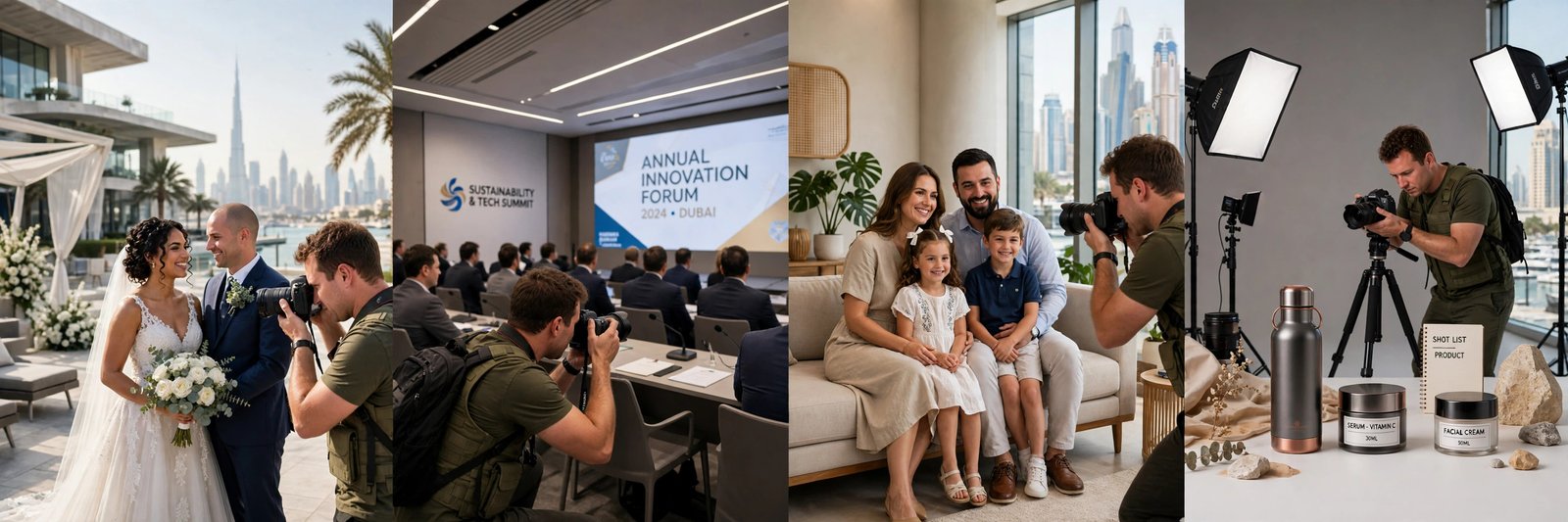
The rule of thumb: if two shoot types would answer the same search query with the same content, they can share a page. A wedding search and a product search never would — the client, the work and the evidence are different in every line. That separation is also what stops the photographer’s own pages from competing against each other in search.
Portfolio pages
Portfolio pages: visual-first discovery is won image by image
A portfolio is not a gallery page with a dozen images and no words. Each portfolio is a ranking asset of its own — when it is built the way clients and search engines actually use it.
One portfolio per shoot type the photographer genuinely shoots
Build portfolio pages only where the photographer can genuinely deliver: each page shows the work, names the shoot type, explains how the shoot runs, and gives a real enquiry path. A wedding portfolio gets wedding galleries; a product portfolio gets product work; a corporate portfolio gets event coverage. A page that swaps one shoot name for another across fifty clones reads as exactly what it is — write fewer, and make each one honest about the local fit.
Image SEO is the quiet advantage
Most photographers upload images with camera filenames and no alt text, and then wonder why Google Images never sends them a client. Descriptive filenames, honest alt text that names the shoot and the setting, fast loading and pages that give each image context are the whole game — and almost nobody in this market plays it. A photographer who does, owns the visual results their competitors never enter.
What to avoid: portfolio pages for shoots the photographer does not offer, and galleries that list every image in one endless scroll with no headings, no context and no enquiry path. Both read as thin to clients and to search engines. The client searching “wedding photographer Dubai” wants a photographer who shoots weddings — not a page that mentions weddings in a list of twenty shoot types.
Trust signals
Reviews, galleries and the experience decide the booking
Ranking the shoot-type page gets the photographer into the consideration set. What happens next — a review that names the shoot, a gallery the client can browse, a look at the experience — decides whether the client sends the enquiry or moves on to the next name.
- Reviews that name the shoot type and the experience. A review that says “shot our wedding at the Palm and the gallery made us cry” sells the next booking; a review that says “great photographer” sells nothing. Photographers should ask every happy client for a review that names the shoot they booked and the experience they had — and reply to every review with the same specificity, which keeps the profile looking managed.
- Galleries with real shoots, not stock. A gallery page — which shoots it shows, what the day looked like, what the client received — is the proof a client reads before sending an enquiry. Anonymous “our work” pages with stock images answer none of the questions a client actually asks.
- The experience as proof, not decoration. How the shoot runs, what the client receives, how long the gallery takes: each detail earns its place on the page when it is tied to a shoot type and a client’s search — the wedding at the desert resort, the product launch for the skincare brand. An experience list with no shoot behind it is decoration.
- Recency matters more than volume. A profile with a steady flow of recent reviews and recent galleries looks like a photographer who is busy and trusted right now. A profile whose newest review is months old raises the question every cautious client asks: is this photographer still active? A simple habit — asking every happy client for a review after the gallery is delivered — keeps the profile fresh without any extra spend.
- Photos that show real shoots and real clients. Real weddings, real events and real family sessions do more for trust than any stock image. Clients choosing who photographs their most important day look for signs of a real, organised professional — named shoots, proper process, consistent branding across the profile and the website.
- Consistency everywhere. The same photographer name, phone, shoot-type list and areas on the site, the GBP and UAE directories. Mismatches are read as risk signals by exactly the clients this market can least afford to spook — people handing over their wedding day or their brand launch.
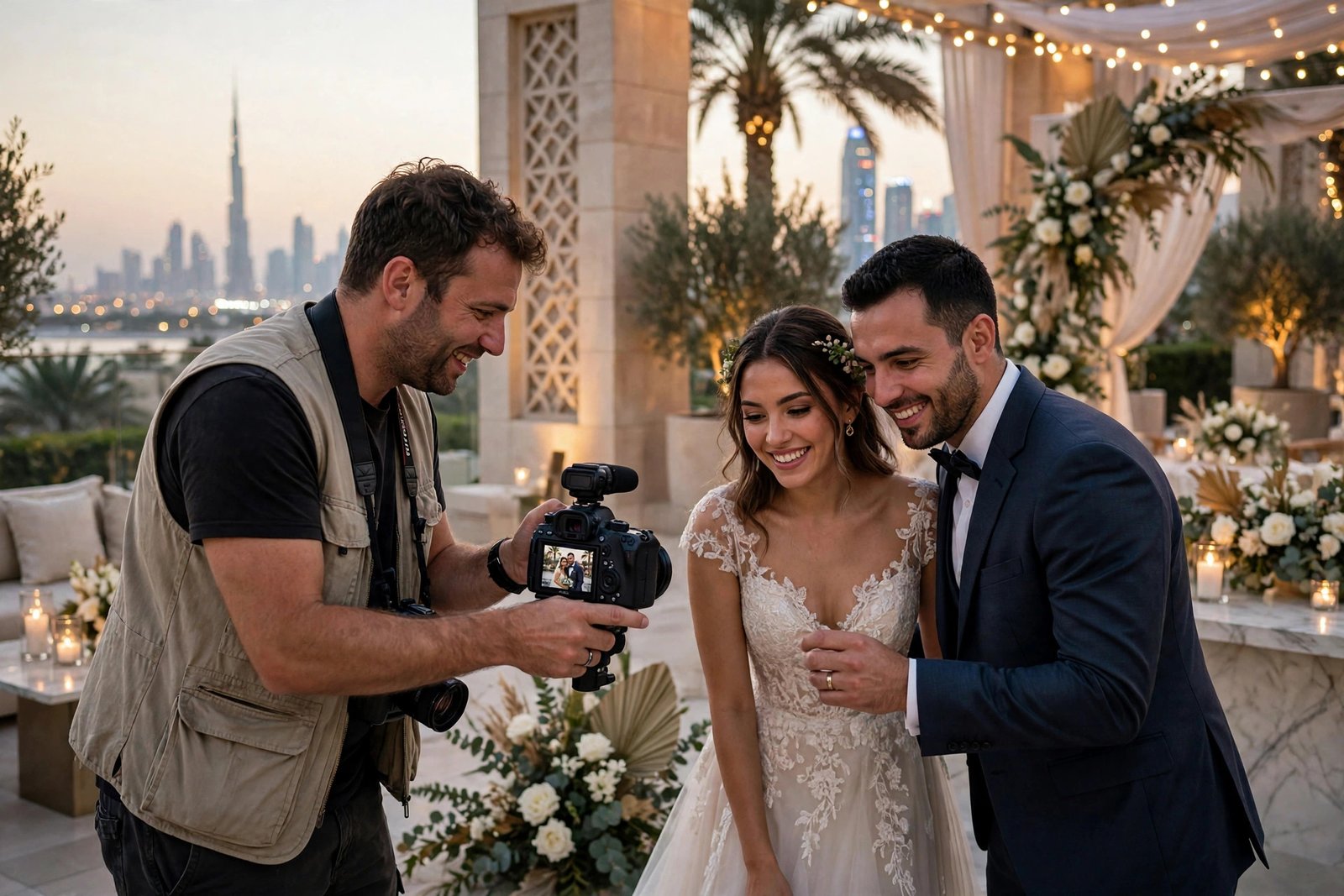
Map pack & GBP
The Google Business Profile: the map-pack layer that wins “near me”
For a photographer, the Business Profile is not an afterthought — it is the first screen a nearby client sees, and the layer that decides who appears in the map pack at all.
Categories, hours and services — set correctly
Categories are the profile’s shoot-type pages: Photographer, Wedding Photographer, Portrait Studio, Event Photographer, Commercial Photographer — chosen to match what the photographer actually shoots, not every category that sounds good. Service areas, hours and the shoot-type list belong on the profile itself, in the same words the website uses, so the client and the search engine see one consistent photographer. NAP consistency — the same name, address and phone on the site, the profile and UAE directories — is what lets the map pack trust the listing.
Posts, photos and review replies that keep working
Recent shoot posts, photos from real weddings and events, and replies to every review keep the profile alive between searches. Bilingual English and Arabic content matters here: clients search in both languages, and a profile that answers in both reaches both. A post about this week’s wedding, a photo from a corporate shoot, a reply that names the shoot the client reviewed — each one is a small signal, and together they are what separates the photographer in the map pack from the photographer below them.
What to avoid: a profile with the wrong category, stale hours, or a review section nobody replies to. For “near me” searches, the profile is the photographer — clients decide on it before they ever reach the website.
AI search
How AI Overviews and ChatGPT change how photographers get discovered
A growing share of “which photographer should I book” research now happens inside AI answers. Those answers quote pages that are built to be quoted.
Structure that AI can cite
AI answers lift short, self-contained definitions and direct answers: a one-paragraph explanation of what a wedding photography booking includes, a clean list of what a shoot covers, a direct answer to “how do I choose a photographer in Dubai” framed as a shortlist check rather than a rule. Pages built with those blocks — like this page’s short-answer boxes — get quoted; pages buried in prose get skipped.
Entity clarity across the web
AI systems assemble the photographer from every source: the site, the GBP, directories, reviews, portfolio listings. The same name, shoot types and areas everywhere is what lets an answer describe the photographer accurately. Inconsistency doesn’t just confuse Google — it gets the photographer misdescribed in front of a client who is ready to enquire.
Conversational queries are shoot-type queries
Voice and chat searches sound like conversations — “find a wedding photographer in Dubai Marina who shoots documentary style” — but they resolve to the same shoot-type-plus-style structure. Pages that answer in plain language, with the shoot type and the style in the heading, match both typed and spoken queries without any separate “voice SEO” layer.
Reviews feed the AI answer too
When an AI answer recommends a photographer, it leans on the same trust signals a human checks: recent reviews, a complete profile, consistent business information. A photographer whose reviews name the shoot type and the experience gives AI systems quotable evidence — which is why review collection is an AI-search tactic, not just a reputation one.
Measurement
How to tell whether the SEO is actually working
Traffic is a vanity number in this niche. The only metrics that matter end in a booking enquiry — and then a booked shoot.
- Tracked booking enquiries by shoot type. Every shoot-type page carries an enquiry path, and every enquiry is attributed to the page and query that produced it. A page that ranks but never books an enquiry is a page to rebuild.
- Enquiry-to-booking conversion. Whether the clients who enquire actually book — the number that separates SEO that fills a photographer’s diary from SEO that fills an inbox.
- Calls and WhatsApp enquiries by shoot. Call tracking per page shows which shoots the market actually wants — and which shoot-type pages are winning the queries that end in bookings.
- GBP actions. Calls, direction requests and profile views per area signal whether the local layer is pulling its weight — and which areas deserve a dedicated page next.
- AI-answer presence. Whether the photographer’s definitions and pages appear inside AI Overviews and assistant answers for their core shoot-type queries — the discovery channel that barely existed two years ago.
- Bookings, not positions. Rankings are a leading indicator; booking enquiries and confirmed shoots are the number. The dashboard a photographer actually reads lists enquiries, by shoot type, by area, by source.
The honest test: pick the three shoot types that matter most — usually the photographer’s wedding, corporate and family work — and judge the SEO on those three pages alone for a full quarter. If enquiries from those pages are rising and bookings are following, the strategy is working. If rankings rise and enquiries don’t, the pages are answering the wrong question.
Pricing
What SEO for a photographer in Dubai costs
Fixed monthly retainers, no hourly billing, no hidden extras. Every engagement starts with a detailed audit, and every plan includes a free 15-minute visibility review before you commit.
Foundation
AED 1,500/month
For a photographer getting the search foundations right: shoot-type pages, local signals and a Google Business Profile that actually works.
Growth
AED 3,500/month
For photographers ready to own their shoot types: portfolio pages, review systems, visual-first content that captures shoot-type searches, and AI-answer presence.
Authority
AED 6,500/month
For established studios competing across Dubai: full shoot-type and style coverage, brand-level authority, and a measurement setup built around enquiries and bookings.
Start with the audit: a detailed SEO audit from AED 1,499 maps your current pages against shoot-type, style and enquiry intent, checks your AI-answer presence, and shows you the build order — shoot types to portfolios to enquiry content. See the full breakdown on our SEO pricing page, or start with a detailed SEO audit.
Related
Where photographer SEO connects
Photographer search doesn’t live on Google alone — it starts on social search too. Clients discover photographers on TikTok and Instagram before they ever type a query into Google, and that discovery is its own lane: our social search SEO page covers how Dubai brands win TikTok and Instagram search — searchable profiles, video-first discovery and the handoff from social to website — while this page owns shoot-type pages, visual search and booking enquiries. Start either engagement with a detailed SEO audit, and see the fixed monthly pricing before you commit.
Key takeaways
The short version
- Clients search the shoot type, then the portfolio, then the trust signals — every shoot type needs its own ranking page.
- Dubai’s shoots are micro-markets — shoot-type-plus-style queries beat generic local pages.
- The enquiry is the conversion — shoot-type pages that show the work and answer the client’s questions win the booking.
- The shortlist is decided after the click — reviews that name the shoot and the experience close the enquiry.
- Photography is a visual trust purchase — SEO that shows the work wins the client who books again.
- Measure bookings, not traffic — enquiries and confirmed shoots are the number that matters.
FAQ
Photographer SEO, answered
Yes — because each shoot type is a different client with a different search. A wedding page speaks to a couple choosing who photographs their day; a corporate page speaks to a marketing manager booking event coverage; a product page speaks to a brand choosing who shoots its range. One shared services list answers none of them properly, and it cannot rank for all of their queries at once. Give each shoot type its own page, written for that shoot’s client, with its own galleries and its own enquiry path.
A wedding search is style- and trust-led: the client asks whose work looks like their day, how the day is covered, and what other couples say. A corporate search is reliability- and range-led: the client asks who has covered conferences before, how fast the gallery arrives, and how the booking works. Different questions, different proof, different pages — a corporate page that talks about weddings answers neither client.
Only if the work also lives on a website built for search. Instagram is where clients discover photographers; Google is where they compare and book them. A photographer whose galleries, shoot-type pages and reviews exist only on Instagram never enters Google or Google Images results, never appears in the map pack, and never gets cited by AI answers. The photographers who win bookings run both: social for discovery, and a website that turns discovery into an enquiry.
The work first — real galleries from that shoot type — then how the shoot runs, what the client receives, and how to enquire, answered on the page rather than hidden behind a form. A shoot-type page that shows the work and answers those questions in plain language wins the booking from the client who is comparing three photographers. Add a review that names the shoot, and the client has no reason to ask the next photographer instead.
The client’s location is the query. Google and the map pack answer with the photographers nearest that client, filtered by the shoot type the client searched for and ranked by the strength of each photographer’s profile: correct categories, complete shoot-type list, recent reviews, and consistent business information. Shoot-type pages on the website then confirm the match — the photographer in that shoot type, with a gallery the client can see and an enquiry the client can send. A photographer with no shoot-type pages and a thin profile never enters the answer at all.
The shoot types the photographer actually offers, in the right categories; service areas where they apply; photos from real weddings, events and sessions; and a steady flow of reviews that name the shoot type and the experience — with a reply to each one. Bilingual English and Arabic content reaches the clients who search in both languages. For “near me” searches the profile is the photographer: clients decide on it before they ever reach the website.
There is no guaranteed timeline, and any firm promising one should be questioned. The honest measure is the build order: shoot-type pages first, then portfolio pages, then the enquiry content and the review system — judged on one quarter of tracked booking enquiries from the three shoot types that matter most. If enquiries from those pages are rising and bookings are following, the strategy is working; if rankings rise and enquiries don’t, the pages are answering the wrong question.
Free AI Visibility Audit
See which booking searches your portfolio’s site is missing
We map your current pages against shoot-type, style and enquiry intent, check your AI-answer presence, and show you the build order — shoot types to portfolios to enquiry content. Drop your details and we will run the audit.
Your next client is searching their shoot type right now. Be the photographer the page shows.
Build one page per shoot type, show the work on every page, make trust verifiable — and measure it all in enquiries and booked shoots.
Last updated: 2026 · Reviewed by Liaquat Ali, SEO Specialist